Scissor lifts are a crucial part of the modern industrial and construction landscape. But for businesses evaluating their purchase or rental, one key question arises: How many hours is a scissor lift good for?
Most electric self-propelled scissor lifts can run 6–10 hours on a full charge, making them suitable for a full indoor work shift in most warehouse and maintenance applications. Larger platforms carrying heavier loads may experience shorter runtime per charge.
Under normal operating conditions, most electric scissor lifts can typically operate:
• Approximately 6–8 hours continuously
• 8–10 hours intermittently on a full charge
Under normal indoor working conditions, a fully charged battery-powered model can usually complete a full working shift. The table below provides a quick reference:
| Operating Condition | Typical Runtime |
|---|---|
| Continuous use | 6–8 hours |
| Intermittent use | 8–10 hours |
| Rough terrain | 6–8 hours |
| Heavy lifting at full height | 4–6 hours |
The answer isn’t as simple as a single number—it depends on the overall lifespan of the machine as well as the battery runtime for electric models.
In this article, we’ll break the question into two parts:
1.How many hours can a scissor lift run per charge?
2.How many total hours a scissor lift can operate in its lifetime?
Let’s explore both in detail.
Electric scissor lifts, especially self-propelled electric scissor lifts, are powered by onboard batteries. While the machine may last years, the battery needs regular recharging and has its own runtime limits.
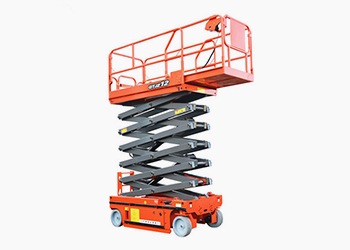
Parameter reference: Taking common 6m and 8m scissor lifts as examples, platform capacities typically range from 230kg to 450kg, accommodating 2–3 people working simultaneously. Battery runtime does not vary significantly between different platform height models, but frequent operation at maximum height will noticeably reduce runtime per charge.
• Continuous use: approximately 6 to 8 hours
• Intermittent use: 8 to 10 hours (one full workday)
“Battery-powered lifts can typically operate 4–6 hours continuously on a full charge, depending on the weight load and terrain.”
Understanding how long a battery-powered scissor lift can run on a single charge requires looking beyond averages. Below are practical factors that directly impact daily operating time.
a) Terrain and Surface Conditions
Smooth indoor floors create less rolling resistance, allowing runtime to reach 8–10 hours with intermittent lifting.
Rough outdoor construction sites increase motor load and battery consumption, often reducing runtime by 20–30%, typically to around 6–8 hours.
For operations on special floor surfaces, please refer to whether using a scissor lift on tile floors will cause damage.
b) Platform Height and Lifting Frequency
Frequent lifting at maximum platform height requires more power than low-level operation.
If a lift operates near full height for most of the shift, expected runtime may drop to around 4–6 hours.
c) Load Capacity
Running close to maximum load capacity reduces battery runtime compared to lighter loads.
Heavier loads require more energy during both driving and lifting operations.
d) Temperature and Environment
Cold weather can significantly reduce battery efficiency.
• Below 40°F / 4°C: Lead-acid batteries may lose 20–30% of effective capacity.
• Above 95°F / 35°C: High temperatures can accelerate battery wear and reduce long-term performance.
e) Driving vs Lifting Ratio
A lift used mostly for driving consumes battery power faster than one used mainly for stationary lifting.
Typical example:
• 70% driving / 30% lifting → around 5–6 hours
• 30% driving / 70% lifting → 8+ hours
Yes — under normal indoor conditions with intermittent use, most electric scissor lifts can complete a full working shift on a single charge.
For continuous heavy-duty use, rough terrain operation, or extended driving distances, runtime may decrease. In these situations, some operators schedule charging during work breaks to extend working time.
For multi-shift operations, some companies choose larger battery capacity models to reduce charging downtime.
Even the best batteries degrade over time:
• Typical battery life: 3 to 5 years
• Signs of wear: Shorter working time, longer charging cycles
Battery lifespan depends heavily on charging habits, operating environment, and maintenance quality.
Common signs that the battery may need replacement include:
• Shorter working time
• Slower lifting speed
• Longer charging cycles
• Reduced operating efficiency
When operating outdoors or in changing weather conditions, you should also consider whether scissor lifts can be exposed to rain to understand the equipment’s waterproof rating and precautions for rainy-day operation, as this also affects battery and overall machine life.
Proper battery maintenance helps maintain stable runtime and extend service life.
• Don’t let batteries discharge fully.
• Use appropriate chargers.
• Charge overnight when possible.
• Store in cool, dry environments.
“Battery care is just as important as machine maintenance. Well-maintained batteries can last 5 years.”
— Watsons Equipment
Let’s say you operate a self-propelled scissor lift 3 hours daily in an indoor warehouse. The lift is properly maintained and charged overnight.
• Yearly usage: ~780 hours
• Expected lifespan: 3–4 years before needing major service
• Battery runtime: 1 full shift (with intermittent use)
Now compare this with a towable scissor lift used once per week for facility maintenance:
• Yearly usage: ~100 hours
• Expected lifespan: 8–10 years with light use
• Battery runtime: Also 1 full day (but recharges less frequently)
Real-World Data: Sino Lift Warehouse Test
“Under 70% driving / 30% lifting conditions in our 500㎡ warehouse, GTJZ06 model ran 7.2 hours continuously before hitting 20% battery reserve.”
• Stick to OEM maintenance schedules (check every 3 months or 150 operating hours)
• Train all operators on safe use
• Avoid overloading or driving on steep slopes
• Regularly inspect tires, batteries, and control systems
• Never skip battery maintenance
• Use on proper terrain; avoid muddy or steep areas
“Preventive maintenance and scheduled checks are key to keeping your lift operating safely and longer.”
— JLG Industries
Yes. Frequent driving usually drains batteries faster than stationary lifting.
Yes. Low temperatures can reduce lead-acid battery capacity by 20–30%.
Common signs include shorter runtime, slower lifting speed, and unusual charging behavior.
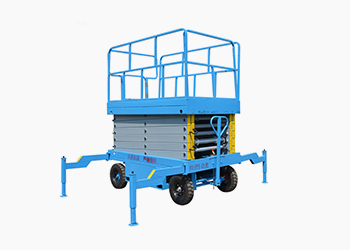
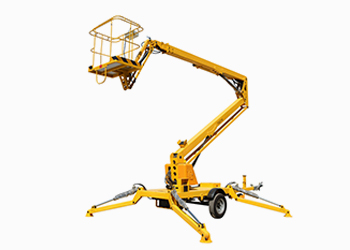
In addition to standard electric scissor lifts, you can choose rough terrain scissor lifts for rugged job sites, crawler scissor lifts for soft ground, and trailer-mounted boom lifts for flexible applications. Select the most suitable model based on your specific working conditions.
So, how many hours is a scissor lift good for? The short answer:
• Total lifespan: 500–1,000+ hours, depending on type, maintenance, and usage
• Per charge: 6–8 hours continuous use, 8–10 hours intermittent use
• Battery life: 3–5 years on average
By investing in proper maintenance and operator training, your electric or self-propelled scissor lift can deliver safe and reliable service for years to come.
HENAN SINO LIFT CO., LTD provides self-propelled electric scissor lifts with stable battery performance, CE-certified safety systems, and global shipping support.
Available in multiple platform heights and battery configurations for warehouse, facility maintenance, and indoor industrial applications.
Email: INFO@CNSINOLIFT.COM
Website: www.cnsinolift.com