


1. Fixed vs Self-Propelled Scissor Lift: Basic Differences
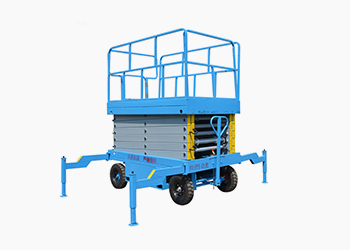
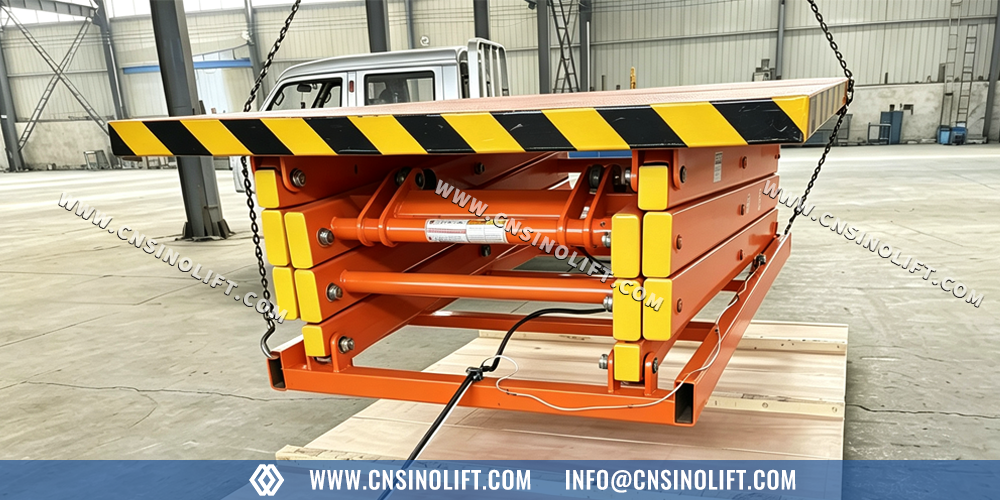
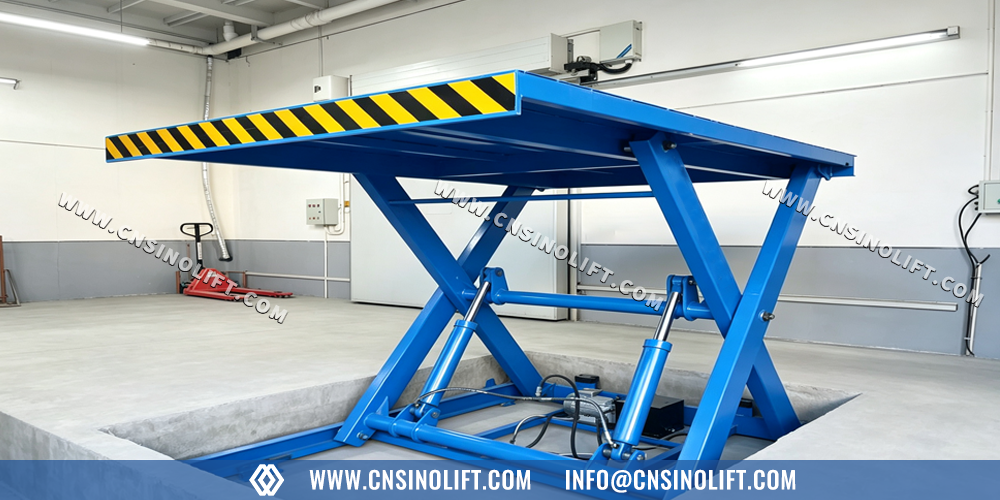
Fixed scissor lift — also known as a stationary lift table or hydraulic lift table — is an industrial lifting platform installed at a permanent location, typically embedded in a pit or anchored to the floor. It functions as permanent infrastructure, dedicated to heavy-duty, repetitive vertical material handling.
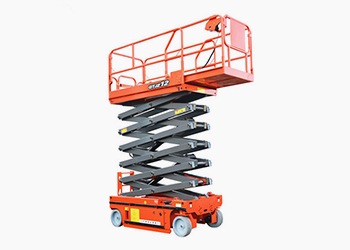
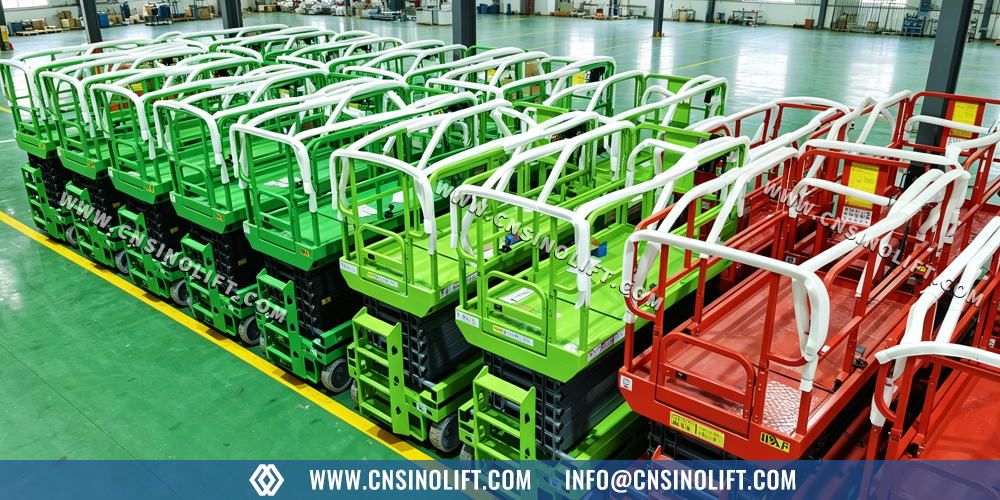
Self-propelled scissor lift is a mobile elevating work platform equipped with a battery pack and drive system. Operators can control travel and elevation from within the platform. It is essentially a self-moving work crew, designed specifically for multi-point, high-frequency relocation tasks.
Core Distinction: A fixed scissor lift moves goods vertically at a single fixed point; a self-propelled scissor lift transports personnel to various heights and locations.
2. Technical Specifications Comparison (With Real Product Examples)
| Parameter | Fixed Scissor Lift (SJG Series Examples) |
Self-Propelled Scissor Lift (GTJZ Series Examples) |
|---|---|---|
| Mobility | Permanently installed, immovable | Self-propelled, tight turning radius (select compact models support zero-turn) |
| Load Capacity | 1,000 – 4,000 kg (1–4 tons standard; higher capacity customizable) |
230 – 500 kg |
| Lift Height | 0.99 – 1.4 m (standard platform lift height) | Working height 8 – 18 m |
| Platform Dimensions | Min 1.3×0.85 m; Max 2×1.2 m (customizable) | Compact; narrowest width just 0.8 m |
| Power Source | External 380V/220V AC power | Maintenance-free battery (standard) |
| Installation | Requires pit or anchoring; civil works necessary | No installation required; charge and operate immediately |
| Example Models | SJG1003: 1,000 kg / 1.3 m / 1.7×0.85×0.24 m SJG2003: 2,000 kg / 1.3 m / 1.7×0.85×0.25 m SJG4003: 4,000 kg / 1.4 m / 2×1×0.3 m |
GTJZ06S: 230 kg / 8 m / 1.85×0.8×2.22 m GTJZ10: 320 kg / 12 m / 2.47×1.18×2.48 m GTJZ14: 227 kg / 16 m / 2.87×1.37×2.87 m |
| Safety Systems | Mechanical safety locks, emergency lowering system, overload protection | Tilt sensor, pothole protection, overload alarm (standard) |
| Operating Environment | Primarily indoor; outdoor use requires level, hardened ground | Indoor & outdoor; non-marking tires suit various ground conditions |
Selection Tip: While standard fixed scissor lifts feature a closed height of just 0.2–0.3 m (allowing pit installation flush with the ground), the lifting height is fully customizable to match your specific workflow requirements. Narrow-body self-propelled models (e.g., GTJZ06S, width 0.8 m) can pass through standard freight elevators, making them ideal for overhead maintenance. Higher tonnages and greater travel heights are available through customization. As a professional electric scissor lift manufacturer, SINO LIFT recommends selecting equipment based on three factors: load requirements, operating frequency, and mobility needs.
3. Fixed Scissor Lift: Advantages, Limitations & Applications
Fixed scissor lifts come in several configurations tailored to different industrial tasks. To explore the most common variants, take a look at this overview of 5 types of scissor lifts.
Advantages
- Exceptional structural rigidity — withstands years of heavy-duty cyclic operations
- Platform can be customized extra-wide and extra-long to interface with production lines or truck beds
- External power supply enables continuous, uninterrupted operation
- Extremely low maintenance requirements
- Mechanical safety locks, emergency lowering system, and overload protection ensure reliable operation
Limitations
- Confined to a single workstation
- Upfront civil engineering work mandatory (pit excavation, concrete foundation)
- Standard lift height 1–1.4 m; while higher travel is customizable, it is not designed for personnel elevation
Ideal Application Scenarios
- Loading docks that load and unload trucks at the same fixed position daily
- Production lines repeatedly lifting pallets or molds weighing tons by approximately 1 meter
- Automotive repair shops requiring embedded platforms to lift vehicles or heavy components
- Warehouse mezzanines needing a flush-with-floor lift access hatch
- Operations demanding near-zero maintenance and stable performance for over a decade
4. Self-Propelled Scissor Lift: Advantages, Limitations & Applications
Understanding the balance of strengths and weaknesses is key to selecting the right machine. You can review a detailed breakdown in this article on the advantages and disadvantages of scissor lifts.
Advantages
- Single-person operation — no waiting to relocate
- Compact footprint — passes through doors and fits in elevators
- Significant working height capability (up to 18 m) — ideal for overhead maintenance
- No ground preparation required — ready for immediate use
- Standard tilt sensor, pothole protection, and overload alarm
Limitations
- Load capacity capped at 500 kg; cannot lift ton-level cargo
- Battery cannot sustain full-load continuous operation for an entire shift
- Sensitive to ground unevenness — tilt protection locks operation on slopes
- Drive motor and battery are consumable components
Ideal Application Scenarios
- Maintenance teams moving between multiple workshops daily for lighting, ceiling, and piping repairs
- Warehouses conducting weekly inventory checks across various high-bay racking aisles
- Construction and fit-out crews on short-duration projects requiring equipment to relocate with the site
- Shopping malls and airports needing quiet, zero-emission overhead maintenance at night
- Sites where civil ground modifications are impractical
5. Cost Comparison: Fixed vs Self-Propelled Scissor Lift
Prices vary based on configuration, order quantity, destination country, and customization requirements. For a deeper dive into current market pricing, refer to this scissor lift price guide. The following FOB prices serve as reference only.
Fixed Scissor Lift (Hydraulic Lift Table)
- Standard 1–4 ton models: USD 1,500 – 3,000
- Entry-level 1,000 kg model starts at approximately USD 1,500
- Custom heavy-duty models may exceed USD 3,000 depending on specifications
- Example: Custom 1.5×1.5 m platform, 1.3 m lift height, 4-ton capacity — approximately USD 3,500
- Total investment must also include pit excavation, concrete foundation, power cabling, and commissioning costs
- Long-term operational costs are extremely low
Self-Propelled Scissor Lift
- Typical electric self-propelled scissor lifts, working height 6–16 m, have FOB prices ranging approximately USD 5,400 to USD 11,700 (depending on working height, hydraulic drive type, and manufacturing quality)
- No upfront civil works required, but the battery (lifespan ~3–5 years), drive motors, and tires are periodic replacement costs
- When annual usage frequency is low, short-term rental may prove more economical
6. Which Equipment Delivers Higher ROI?
Below is a quick ROI comparison to help you assess the long-term value of each type:
| ROI Factor | Fixed Scissor Lift | Self-Propelled Scissor Lift |
|---|---|---|
| Optimal Usage Pattern | Long-term fixed production | Project-based mobile operations |
| Costs Reduced | Manual handling, forklift expenses | Scaffolding erection, recurring rental costs |
| Asset Flexibility | Low | High |
| Long-Term Value | Higher durability & service life | Higher residual value |
Fixed Scissor Lift ROI
- Best suited for high-frequency daily operations at a fixed location
- Reduces manual handling and forklift dependency
- Once installed, operating costs remain extremely low for years — upfront civil works are repaid through long-term stability and near-zero maintenance
Self-Propelled Scissor Lift ROI
- Best suited for multi-point, project-based operations
- Eliminates the time and cost of erecting scaffolding or repeatedly renting equipment
- One unit can cover dozens of work points, reducing total equipment procurement needs
- Equipment mobility allows it to move between projects or be resold, preserving residual value
Quick Judgment: If your workstation is fixed and you need to lift goods every day, a fixed lift table offers a lower total lifecycle cost. If your work points move with projects, the mobility of a self-propelled lift avoids redundant investment.
7. How to Select the Right Scissor Lift
Before sending an inquiry, clarify these three numbers:
① How heavy is the load? Over 1 ton → Fixed scissor lift.
② How many work points? More than 3 requiring frequent relocation → Self-propelled scissor lift.
③ Is it easy to excavate a pit and is stable power available on site? If civil works are difficult → Self-propelled scissor lift.
② How many work points? More than 3 requiring frequent relocation → Self-propelled scissor lift.
③ Is it easy to excavate a pit and is stable power available on site? If civil works are difficult → Self-propelled scissor lift.
Bring a floor plan marked with all lifting or access points and let the supplier recommend based on standard models — this is far more reliable than guessing. For additional selection insights, consult our scissor lift purchasing guide.
8. Frequently Asked Questions
Can I add casters to a fixed lift table?
No, doing so would compromise its structural integrity. If mobility is required, choose a self-propelled model directly.
How long does the battery of a self-propelled scissor lift last?
Under normal intermittent operation, the battery can sustain a full shift. Continuous full-load lifting will deplete the charge faster. Battery service life is approximately 3–5 years.
Do I need an operator certification?
Fixed cargo platforms generally do not require one; self-propelled aerial work platforms require operator certification in many regions. Always comply with local regulations. Learn more about operator requirements in this article: Can you operate a scissor lift by yourself?
What are the pit requirements for a fixed lift table?
Pit depth must be determined based on the equipment's closed height, installation method, and maintenance access space. Drainage and inspection access should also be planned. It is recommended that a civil engineer design the pit according to the specific equipment drawings.
Which type has a longer service life?
Under proper use, fixed scissor lifts tend to last longer due to fewer moving parts. However, chronic overloading of a self-propelled unit or frequent forklift impacts on a fixed unit will prematurely shorten either one's lifespan. For more details on self-propelled model longevity, see this article on the lifespan of a self-propelled scissor lift.
Can self-propelled scissor lifts be used outdoors?
Yes, most models are designed for solid, level indoor and outdoor ground. Some are equipped with non-marking tires and optional rough-terrain features. If you're concerned about weather exposure, read can electric scissor lifts get rained on?
What is the difference between a scissor lift and a lift table?
A scissor lift (especially self-propelled) is typically used to elevate personnel and tools to various heights, whereas a lift table (fixed scissor lift) is used to raise and lower heavy goods at a stationary workstation. The former transports people to work at height; the latter hoists cargo to a specified elevation.
Can a self-propelled scissor lift replace a fixed lift table?
Not completely. There are fundamental differences in load capacity, work purpose, and duty cycle. Self-propelled lifts are designed for personnel and light tools across multiple locations; fixed lift tables are for heavy-duty, repetitive cargo handling at a single workstation. They are complementary, not interchangeable.
9. SINO LIFT Custom Scissor Lift Solutions
SINO LIFT provides tailored scissor lift selection support based on your working height, load requirements, and operating environment. Whether you need a fixed lift table embedded in a pit or a self-propelled aerial platform covering 8–18 m working heights, we deliver matched solutions with FOB quotations.
Get Your Customized Solution & FOB Quote
Send us your lifting height, load capacity, platform dimensions, and operating environment.
SINO LIFT engineers will recommend the most suitable fixed or self-propelled scissor lift solution and provide a customized FOB quotation.