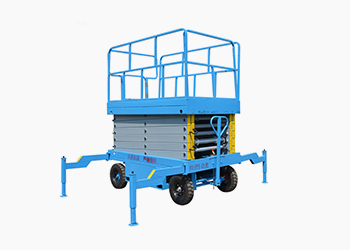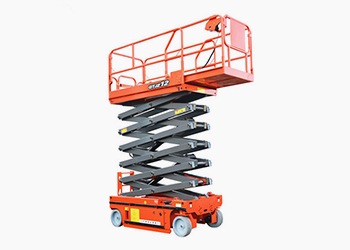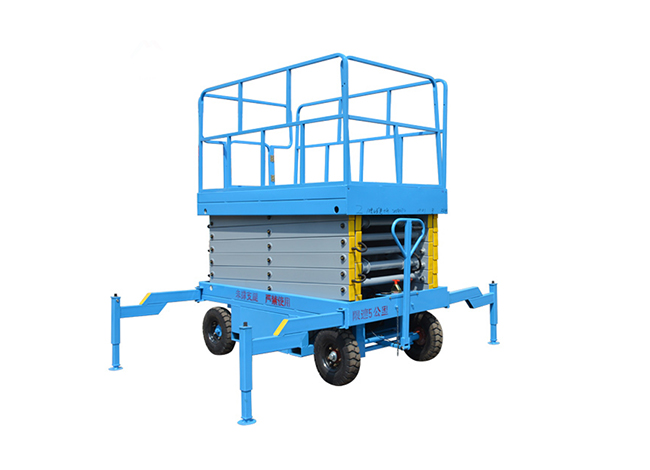
A scissor lift is an aerial work platform that achieves vertical lifting through the telescopic linkage of scissor arms. The whole machine is generally constructed with high-strength manganese steel scissor structure, featuring high rigidity, stable load capacity, smooth lifting and excellent deformation resistance. Driven by a hydraulic system, it delivers stable power output with low operating noise and smooth start-stop performance, balancing safety and efficiency during aerial operations.
Compared with traditional scaffolding and simple lifting equipment, scissor lifts have outstanding advantages such as large load capacity, wide lifting height range, flexible movement, simple operation and convenient maintenance. They are widely used in factory maintenance, warehousing logistics, commercial property management, municipal engineering, equipment installation, airport stations and other aerial work scenarios. With the continuous improvement of aerial work safety standards, scissor lifts have gradually become one of the mainstream equipment in modern high-altitude construction.
This article provides a systematic analysis of scissor lift selection and procurement. Combining different working environments, equipment parameters, structural differences and market price ranges, it comprehensively sorts out the core concerns of users in the procurement process. The article focuses on in-depth analysis from multiple dimensions including equipment classification, core parameter interpretation, price influencing factors, model comparison and application scenario matching, helping users make efficient and professional purchasing decisions.
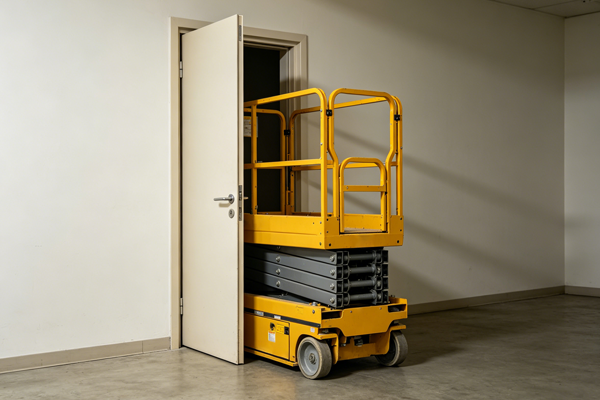
During procurement, many users only focus on lifting height while ignoring key factors including working environment, ground condition, platform load and moving mode. In fact, even for the same 10-meter working height, different site conditions may require completely different types of scissor lifts. Improper selection may lead to poor accessibility, failure to enter narrow spaces, insufficient battery life or ground slipping.
Working Height: What is the maximum working height? Is a safety margin reserved?
Platform Load: How many people plus tools and materials need to be carried?
Working Environment: Indoor or outdoor? Are there dust, moisture or corrosive factors?
Ground Condition: Hardened flat ground / soft lawn / muddy wetland / gravel pit?
Moving Frequency: How many times do you need to move per day? Is driving while lifting required?
Space Limitation: Are passage width, door height or elevator size restricted?
Budget & Frequency: What is the procurement budget? How many days will it be used per year?
Therefore, scissor lift selection requires comprehensive consideration of the above key dimensions. Different demands correspond to different equipment types, and some models can be customized as needed. Click for more details
| Comparison Item | Towable Scissor Lift | Self-propelled Scissor Lift | Crawler Scissor Lift | Rough Terrain Scissor Lift |
|---|---|---|---|---|
| Lifting Height | 4-18m | 4-16m | 4-12m | 10-16m |
| Platform Load | 300-1000kg | 227-550kg | 200-450kg | 320-680kg |
| Travel Mode | External traction | Electric self-propelled | Crawler travel | 4WD off-road |
| Drive Type | Battery, AC, Diesel | Battery, Diesel | Battery, Diesel | Battery, Diesel |
| Suitable Ground | Relatively flat ground | Hardened flat ground | Soft ground, slope | Mud, gravel ground |
| Climbing Capacity | None | 25% | 30% | 30% |
| Extension Platform | Customizable | Standard equipped | Standard equipped | Standard equipped |
| Customizable Options | Custom platform, extension platform, auxiliary walking | One-touch leveling hydraulic outriggers | One-touch leveling hydraulic outriggers | One-touch leveling hydraulic outriggers |
| Application Scenarios | Municipal engineering, store decoration | Supermarkets, exhibition halls, industrial parks | Orchards, wetlands | Construction sites, wilderness, field work |
| Comprehensive Features | Cost-effective, heavy load capacity | Flexible, efficient, good trafficability | Strong terrain adaptability | Excellent trafficability and off-road performance |
Towable Scissor Lift Platform
Suitable for: Budget priority + heavy load + fixed-site operation
Ideal load: 500-1000kg
Relatively fixed working points, relying on external traction for movement
Applicable to factories, warehouses, store decoration on flat ground
Strengths: High cost-effectiveness, large platform, heavy load capacity
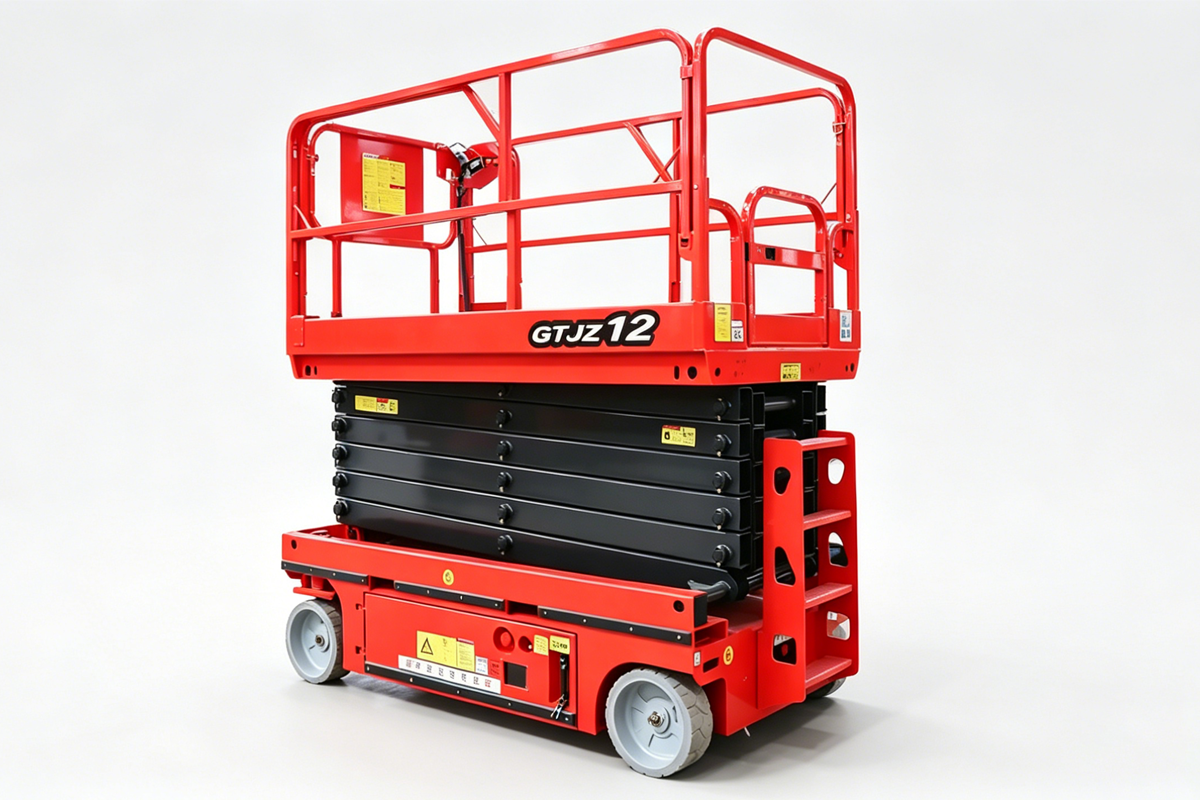
Self-propelled Scissor Lift Platform
Suitable for: High efficiency + frequent indoor and outdoor operation
Load capacity: 227-550kg, balancing load and flexibility
Electric self-propelled, no external traction required, climbing capacity about 25%
Applicable to supermarkets, exhibition halls, industrial parks on standard hardened ground
Strengths: High mobility, high operation efficiency
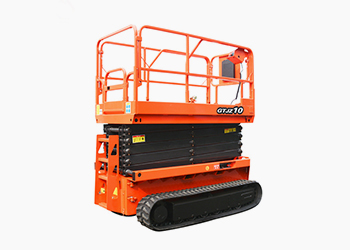
Crawler Scissor Lift Platform
Suitable for: High ground protection requirements + soft/muddy terrain
Load capacity: 200-450kg, climbing capacity 30%
Can work without damaging lawns, tiles or wetlands
Applicable to ecological parks, golf courses, building interiors
Strengths: Ultra-low ground pressure, no ground damage, stable climbing
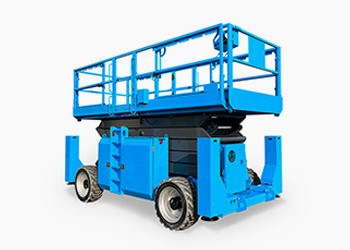
Rough Terrain Scissor Lift Platform
Suitable for: Complex outdoor terrain + high lifting height + heavy load
Load capacity: 320-680kg, relatively high starting height
Can move and work on unleveled construction sites, mud pits and gravel piles
Applicable to steel structure construction sites, field power maintenance, mines, drilling platforms
Strengths: Strong terrain adaptability, powerful performance, excellent trafficability
The essential difference between them lies not in "how high they can lift", but in moving logic and construction organization mode. View original article
| Comparison Dimension | Self-propelled Scissor Lift | Towable Scissor Lift |
|---|---|---|
| Core Logic | Platform as vehicle, autonomous movement | Platform as tool, relying on external traction |
| Operation Mode | Can travel at low speed while lifted, no need to retract repeatedly | Must fully lower the platform and retract outriggers before each move |
| Personnel Allocation | Single person can complete operation and relocation | At least 1 operator + 1 driver for towing vehicle/forklift |
| Relocation Efficiency | Workstation switch within 2 minutes | 15-20 minutes per relocation for hitching, positioning and outrigger adjustment |
| Continuous Operation | Workers can adjust positions on the platform, suitable for long-distance installation/welding | Workers must get off the platform for each relocation, interrupting work rhythm |
| Hidden Costs | Very low time cost, but high battery replacement cost | High time cost, but simple maintenance, no battery anxiety |
| Maintenance Features | Involves electronic control, battery and hydraulic system, requires professional maintenance | Simple structure, can be handled by general mechanical personnel |
| Key Decision Factors | High frequency, efficiency, tight schedule | Low frequency, limited budget, heavy load |
Both have autonomous walking capability, but they have completely opposite attitudes towards ground conditions — one requires standard ground, while the other adapts to complex terrain. View original article
| Comparison Dimension | Self-propelled Scissor Lift | Crawler Scissor Lift |
|---|---|---|
| Core Logic | Achieve efficient movement on hardened ground | Disperse pressure through crawlers to protect and adapt to soft ground |
| Ground Pressure | Relatively high, requires solid ground bearing capacity | Extremely low, no obvious marks on lawns, tiles or wetlands |
| Travel Mechanism | Rubber/polyurethane wheels, suitable for flat hardened roads | Rubber crawlers, large contact area, strong grip |
| Climbing Capacity | About 25% | About 30%, better slope stability |
| Ground Adaptability | Standard hardened ground (concrete, asphalt, flat tiles) | Soft soil, lawn, orchard, wetland, slightly muddy ground |
| Indoor Friendliness | Low noise, no crawler wear debris | May carry mud but low ground damage risk |
| Relocation Method | Self-propelled relocation | Can self-propel, but flatbed transport recommended for long distances |
| Speed & Efficiency | Fast wheel movement, high workstation switching efficiency | Slow crawler speed, prioritizing stability over speed |
| Maintenance Focus | Drive wheels, battery, electronic control system | Crawler tension, support rollers, chassis cleaning |
| Key Decision Factors | Efficiency priority, standard ground, frequent indoor-outdoor switching | Ground protection, soft terrain, climbing requirements |
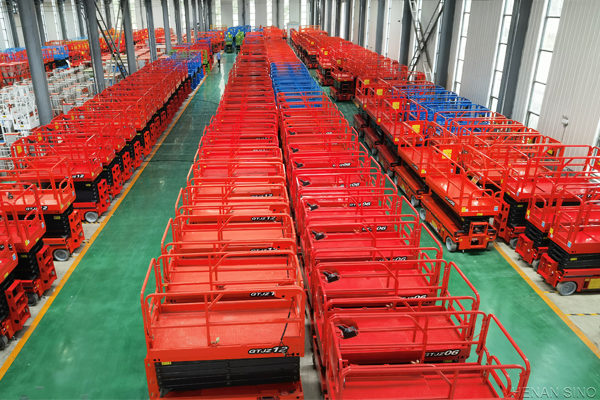
There is no unified market price for scissor lifts. Prices vary greatly due to model type, lifting height, load capacity, hydraulic configuration, drive mode, and manufacturing craftsmanship. Products fall into standard, high-end customized, and special models for complex conditions. Price gaps mainly come from raw materials, hydraulics, electrical controls, and manufacturing processes. Even with the same height and load capacity, prices can differ by thousands of US dollars. High-quality models use thickened high-strength manganese steel scissor arms, branded hydraulic power units, explosion-proof valves, and mature electrical controls, offering better stability, lower failure rates, and longer service life.
| Equipment Type | Lifting Height | Load Range | Reference Price Range |
| Towable Scissor Lift | 4-20m | 300-2000kg | $1400-$9700+ |
| Self-propelled Scissor Lift | 6-16m | 227-550kg | $5400-$13700+ |
| Crawler Scissor Lift | 6-14m | 200-450kg | $12400-$18600+ |
| Rough Terrain Scissor Lift | 8-20m | 320-680kg | $13650-$43000+ |
From the perspective of market application, low-height and light-load models are usually more suitable for light-duty operation scenarios such as warehousing, property management and indoor maintenance, with relatively low procurement costs; while large outdoor projects, high-frequency continuous construction and complex terrain projects tend to choose high-configuration and high-trafficability equipment, so the overall budget will be higher.
It is not recommended to only compare low prices during procurement. A comprehensive evaluation based on actual working conditions, usage frequency and later maintenance costs is more advisable. Temporary short-term work can choose basic economical models; while for long-term high-frequency use, complex construction sites or high-safety requirement scenarios, it is more recommended to choose regular models with higher configurations and more mature craftsmanship to reduce later repair, replacement and shutdown costs. View detailed price
Electric scissor lifts can withstand light rain or short-term damp conditions when fully lowered and safely parked, especially models with electrophoretic anti-rust treatment, whose base and surface components have good corrosion resistance. However, operation with the platform elevated in rainy weather is strictly prohibited, because more electrical and control systems are exposed when elevated, posing risks of water ingress, short circuit and control failure. Meanwhile, slippery surfaces, strong winds and lightning accompanying rainy days will greatly increase the risks of slipping, tipping and lightning strike for operators.
If the working environment may encounter rainfall, it is recommended to prefer enhanced anti-corrosion models with electrophoretic coating and sealed components, cover the machine with a protective cover when idle, park in sheltered areas after work, and regularly check connectors for water damage. If the operation involves long-term outdoor humid or rainy conditions, diesel rough terrain scissor lifts and other outdoor special equipment with better sealing performance should be considered, or consult the supplier for professional solutions. View original article
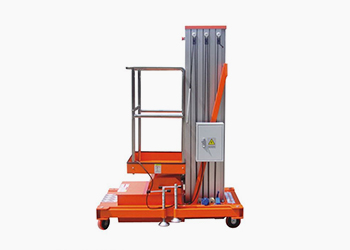
Electric scissor lifts can travel on tile floors, but only if the tiles are heavy-duty commercial grade and laid on a solid concrete base, while using plywood or heavy mats to disperse wheel pressure and driving slowly with light load. If the tiles are old, thin, poorly installed, unprotected or subjected to sudden stops and sharp turns, the concentrated point pressure generated by the 1.2-2.5 ton self-weight and solid tires of the equipment can easily cause cracking. Standard electric scissor lifts are strictly prohibited on soft ground such as grass and mud to avoid slipping and sinking; for high-end fragile floors in exhibition halls and shopping malls, it is recommended to switch to aluminum alloy mast lifts with a total weight of only 265kg, which can greatly reduce ground pressure with wide non-marking tires. View original article
The core of scissor lift operation on lawn is to "turn soft ground into hard ground": prefer rough terrain or crawler/wheel models with outriggers. Before operation, check soil hardness (sinking more than 3-5 cm is high risk), underground hazards, weather humidity (operation prohibited within 24 hours after rain) and overhead obstacles. Before entering the site, large-area outrigger pads must be laid to form a continuous passage. The equipment should enter at low height and low speed, test lift step by step after positioning and observe stability. Wear safety belts throughout the process and avoid unbalanced load. Stop and lower immediately if settlement or tilt occurs, do not take chances. View original article
The service life of scissor lifts needs to be understood from two dimensions: overall machine lifespan and single charge runtime. Well-maintained equipment can operate for more than 500 to 1000 cumulative hours, depending on equipment type (self-propelled models have more complex structures and higher usage frequency), daily maintenance, working conditions and operation standardization. Heavy daily operation may reach 500 hours in 1 year, while light weekly use can last 5 to 10 years. Electric models can operate continuously for 6 to 8 hours on a single charge, and 8 to 10 hours for intermittent use. The battery itself usually has a service life of 3 to 5 years. Avoid over-discharging, use matching chargers and store in a dry environment.
The key to extending equipment life is to strictly implement the original factory maintenance plan (check every 3 months or 150 operating hours), ensure operators are certified, prohibit overloading and steep slope driving, and regularly inspect tires, batteries and control systems. Used equipment under 500 hours is considered in good condition. High-quality brands can even exceed 1500 hours with careful maintenance. Replace the battery when lifting speed slows down, working time shortens or charging abnormalities occur. View original article
High-quality self-propelled scissor lifts can serve an average of 10 to 15 years under standard maintenance, but the actual lifespan is determined by manufacturing quality, working environment, usage frequency and daily maintenance. Equipment made of high-strength steel, durable hydraulic systems and electrophoretic anti-rust coating has better durability. Indoor use usually has a longer lifespan due to avoiding wind and rain erosion, while heavy daily use on outdoor construction sites may reduce the lifespan to 8 to 10 years, and light intermittent use can last more than 15 years.
The key to extending equipment life is to regularly inspect hydraulic systems, electrical components and safety devices monthly, ensure operation by trained personnel and strictly avoid overloading, and store the equipment in a dry and sheltered place when idle to prevent rusting. Overall, choosing a reliable manufacturer with CE certification and adhering to preventive maintenance is the core guarantee for safe operation of scissor lifts for more than ten years and maximizing return on investment. View original article
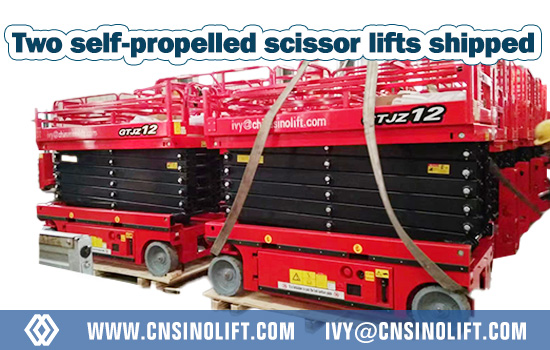
Shipping News: Red 12m Self-propelled Scissor Lift Platform Safely Sets Sail
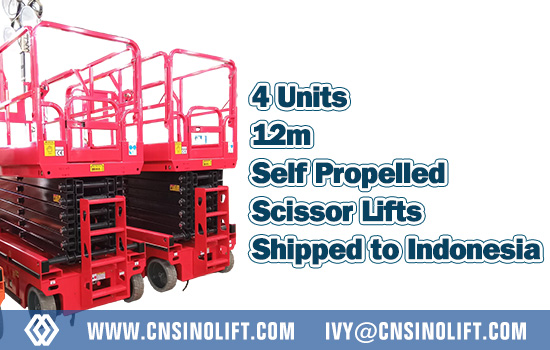
4 Units of 12m Self-propelled Scissor Lifts Shipped to Indonesia
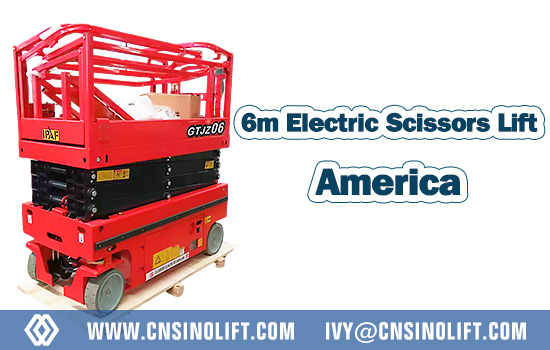
6m Mini Self-propelled Electric Scissor Lift Shipped to USA
About HENAN SINO LIFT CO.,LTD:
HENAN SINO LIFT is committed to providing customers with high-quality and high-performance industrial equipment. Over the years, we have adhered to technological innovation and product quality, earning the trust and support of our customers.
We manufacture Scissor Lift, Mast Lift, Boom Lift, Cargo Lift, Loading Ramp, Wheelchair Lift, Warehouse Handling Equipment. If you need these products, please let us provide a suitable solution for you.
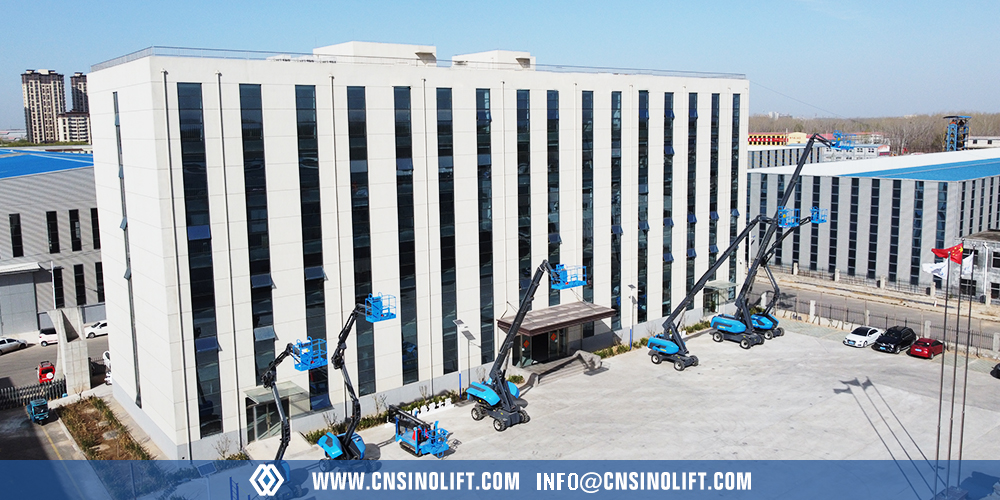
We can provide detailed information on various models and specifications and help you select the platform that best suits your specific needs.
Email: info@cnsinolift.com
Website: www.cnsinolift.com