.png)
When purchasing a scissor lift, many buyers focus on only one question: "How high can it go?"
However, only paying attention to working height is the most common mistake in equipment selection. Even if two projects both require a 10-meter working height, the scissor lift used in an indoor warehouse and the one used on a muddy construction site are completely different. Choosing the wrong equipment can lead to poor passability, battery failure, tire slippage, and even serious safety hazards. This guide translates real job site conditions into a clear, actionable selection framework, helping users quickly find the right solution.
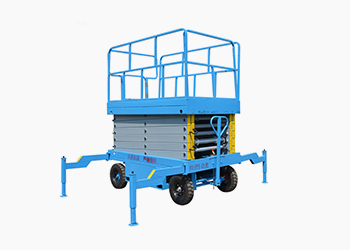
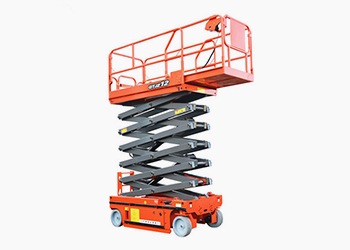
| Specification / Model | Towable Scissor Lift | Self-propelled Scissor Lift | Crawler Scissor Lift | Rough Terrain Scissor Lift |
|---|---|---|---|---|
| Lifting Height | 4-18m | 8-18m | 4-12m | 10-16m |
| Platform Load | 300-1000kg | 227-550kg | 200-450kg | 320-680kg |
| Suitable Ground | Hard, flat ground Warehouse / Epoxy floor |
Hard, flat ground Warehouse / Epoxy floor |
Soft ground, slope | Mud, gravel ground |
| Power / Drive | Battery / AC power (custom diesel) |
Battery (custom diesel) |
Battery (custom diesel) |
Battery (custom diesel) |
* "Custom diesel" means diesel engine option is available upon request.
Step 1: Determine the required working height
Actual working point height + 0.5-1.0 m safety margin = minimum required working height -> determines the equipment class.
Step 2: Calculate the total platform load
(Number of operators x 120 kg) + tools + materials + 20% margin = minimum rated load -> avoid overload shutdown.
Step 3: Identify ground conditions and environment
Hard, level ground -> indoor electric scissor lift model / Soft soil or mud -> rough terrain scissor lift model / Explosion-proof or corrosive environment -> special customization -> determines tire type, power, and protection.
Step 4: Check access dimensions
Narrowest aisle width, lowest door height, minimum turning radius -> stowed width and height -> decide whether a narrow or low-profile scissor lift model is needed.
Step 5: Link mobility frequency to budget
Annual usage < 50 days -> rental / Annual usage > 150 days -> purchase, and select diesel version -> determines the financial model.
A common mistake is confusing platform height (where your feet stand) with working height (the maximum height your hands can reach).
TermDefinitionPractical conversion Platform height The height of the platform floor from the ground when fully elevated The "platform height" listed in product specifications Working height The working height a person can reach while standing on the platform Platform height + approximately 2 mCorrect estimation method:
Common working height ranges by scissor lift type:
| Type | Common working height range |
|---|---|
| Self-propelled electric scissor lift | 6-16 m |
| Towable scissor lift | 6-20 m |
| Rough terrain scissor lift | 10-18 m |
The rated load on the nameplate is the total safe load, not just the number of people. Many job sites have experienced shutdowns because two workers brought a material cart onto the platform, triggering an overload alarm.
The calculation must include:
Recommended rated load by application:
| Work type | Suggested rated load |
|---|---|
| Single person indoor maintenance | 230-320 kg |
| Two workers with standard tools | 320-500 kg |
| Industrial installation with materials | 500-2,000 kg |
Be sure to add an additional 15%-20% safety margin on top of the calculated value to handle unexpected additional weight without affecting stability.
Related topic: Electric Scissor Lift Capacity vs. Operator Weight.
The working environment directly determines the drive method, tire material, and protection level.
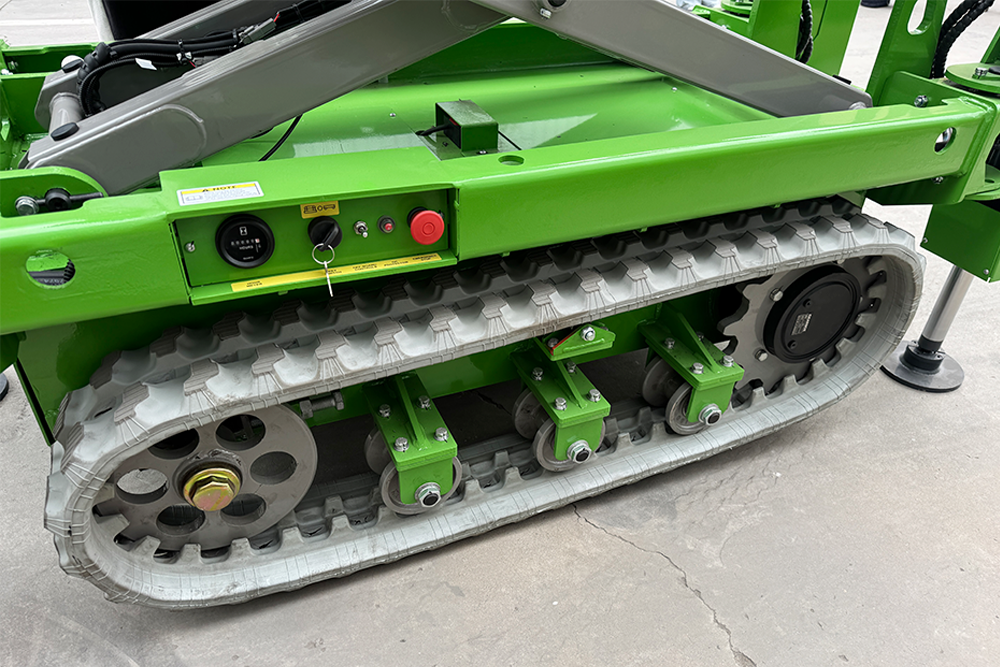
In the vast majority of equipment selection failures, the problem lies in ground conditions. The ground directly determines whether the equipment can stand firmly, turn, or tip over.
| Ground type | Required equipment | Consequence of wrong model |
|---|---|---|
| Hardened concrete / epoxy floor | Standard indoor electric scissor lift | Efficient and safe |
| Soft grass, sand | Wide-tire or track-type scissor lift | Standard tires sink, losing traction |
| Mud, wet clay, slopes | Rough terrain (RT) scissor lift | Standard chassis bottoms out, wheels slip |
| Gravel, sharp stones | Puncture-proof tire rough terrain scissor lift | Sharp stones damage standard solid tires |
| Lateral slope > 3 deg | Auto-leveling outriggers or high-gradeability rough terrain scissor lift | Extremely high risk of tipping when elevated |
Daily workflow determines whether to choose self-propelled or towable.
Self-propelled electric scissor lift (suitable for warehouses, facility maintenance)
Towable scissor lift (suitable for rental and stationary tasks)
A lift that cannot fit through a door or make a turn is useless, no matter how high it can rise. Many narrow-aisle applications require a stowed width of less than 0.76 m (30 inches), while standard model widths range from 0.81-1.2 m.
Key dimensions:
Example of narrow space parameters: A compact electric scissor lift with an 8 m working height can have dimensions of 1.5 m (L) x 0.76 m (W) x 1.8 m (stowed height), a load capacity of 230 kg, and can pass through a standard single door.
Related topic: Will a scissor lift fit through a door?
Annual usage intensity directly determines whether to buy or rent, and what quality level to select.
| Usage intensity | Recommended approach | Reason |
|---|---|---|
| Occasional use (< 50 days/year) | Rental | Eliminates storage, maintenance, and depreciation; allows selecting the optimal model per project |
| Frequent use (50-150 days/year) | Purchase standard model | Higher reliability with your own fleet |
| Intensive use (> 150 days/year) | Purchase high-spec model | Invest in high-quality batteries, reinforced structure, and remote management for lower total cost of ownership |
Total cost tip: The purchase price of a rough-terrain scissor lift may be 1.5 times that of an indoor electric scissor lift model, but its service life under harsh conditions can be 3 times longer, reducing the cost per hour by more than 40%.
Use this quick reference to pinpoint the correct model based on your primary working conditions.
| Your Jobsite Condition | Recommended Scissor Lift Type |
|---|---|
| Indoor warehouse / epoxy floor / standard doors | Self-propelled electric scissor lift (compact / narrow series) |
| Indoor narrow aisle (<1.5m) or elevator access | Ultra-narrow electric scissor lift |
| Outdoor hard concrete / asphalt (flat) | Standard electric scissor lift with IP54 or towable scissor lift |
| Outdoor soft ground (grass, sand, gravel) | Crawler scissor lift or wide-terrain pneumatic tire scissor lift |
| Muddy site, slopes, uneven terrain | Rough terrain (RT) scissor lift (diesel or high-capacity battery) |
| Mixed indoor/outdoor use | Bi-energy or high-range electric rough terrain scissor lift |
| Very high work point (14-20m) + heavy materials | Towable scissor lift or large rough terrain scissor lift |
For any specific working condition, there is no absolutely best scissor lift, only the most suitable one. Let the equipment truly serve the site, rather than making the site accommodate the equipment.
For personalized selection advice tailored to your job site, or to view comparison parameter tables for specific models, [please contact our technical team]
A: Only on hard, dry, and level outdoor surfaces for short periods. Standard indoor electric scissor lift models lack protection against mud and water and the ability to handle soft ground; on wet soil, grass, or uneven surfaces, they are prone to slipping or getting stuck. For any unpaved surface, a rough terrain scissor lift model should be used.
A: First, try to level the ground as much as possible. If unavoidable, you must check the maximum longitudinal and lateral slope angles allowed by the equipment (typically longitudinal slope < 20%, lateral slope < 3-5 deg). Lifting on a slope is extremely dangerous; it is recommended to use a model with auto-leveling outriggers or a rough terrain scissor lift model while constantly monitoring the level indicator.
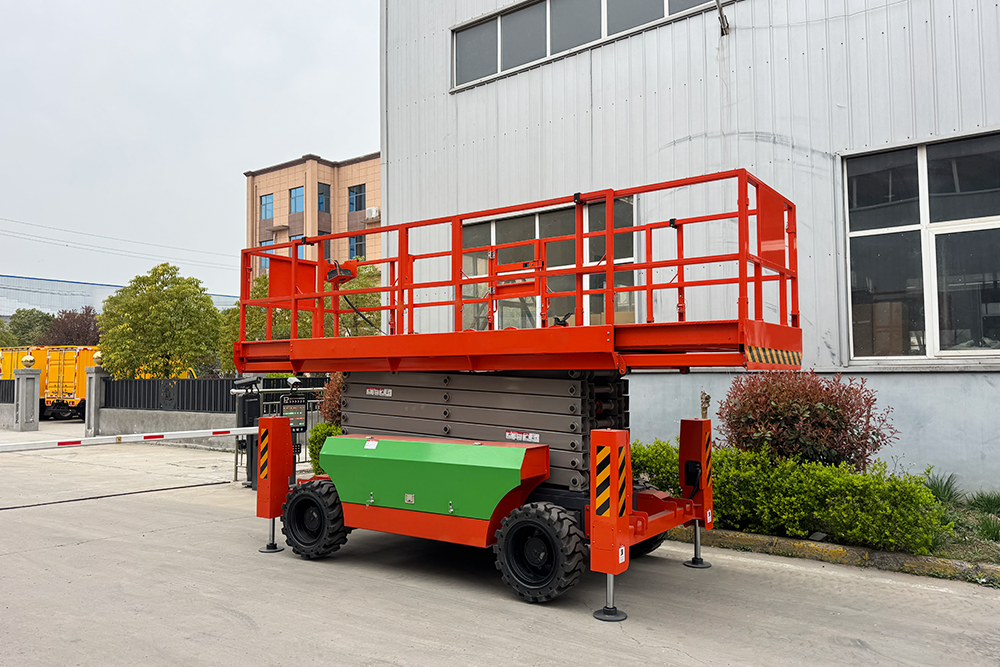
A: The maximum allowable wind speed (generally 12.5 m/s, equivalent to force 6 wind) is the most easily overlooked. Scissor lifts have a large windward area, and a sudden strong wind when elevated outdoors can cause tipping. In addition, pothole protection systems, tilt alarms, and descent alarms are also critical safety features that should be included as mandatory options during selection.
HENAN SINO LIFT is committed to providing customers with high-quality and high-performance industrial equipment. Over the years, we have adhered to technological innovation and product quality, earning the trust and support of our customers.
We manufacture Scissor Lift, Mast Lift, Boom Lift, Cargo Lift, Loading Ramp, Wheelchair Lift, and Warehouse Handling Equipment. If you need these products, please let us specify a suitable solution for you.
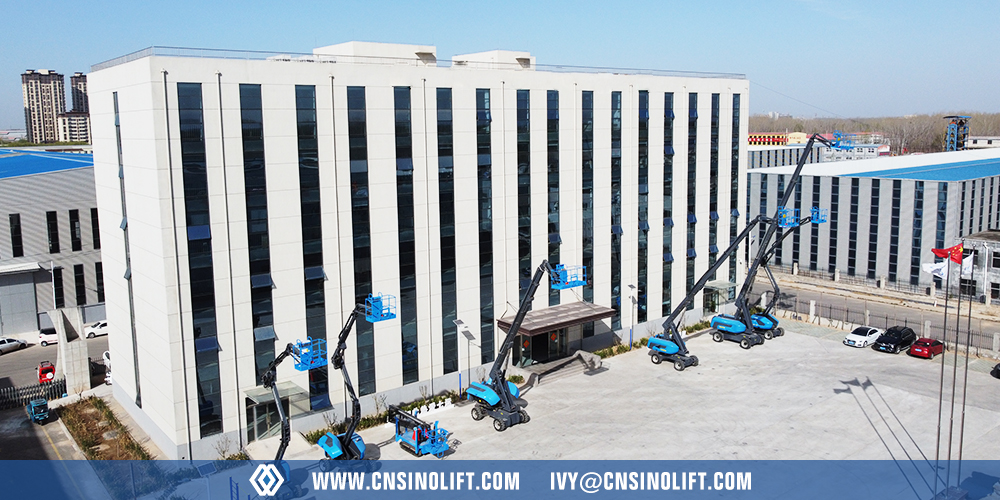
We can provide detailed information on the various models and specifications and help you select the platform that best suits your specific needs.
Email: info@cnsinolift.com
Website: www.cnsinolift.com