Scissor lift batteries typically last 3–5 years or 800–1,500 charge cycles under normal conditions.
For years, we have exported self-propelled electric scissor lifts worldwide for warehouses, factories, malls, airports and construction sites. Customer feedback shows battery life depends mainly on usage and maintenance. With light indoor use, batteries last over 5 years, while heavy-duty rental/construction use limits their service life to 2–3 years.
This guide explains how long scissor lift batteries typically last, how long they can operate on a full charge, what affects battery lifespan, when replacement becomes necessary, and how to maximize battery performance.
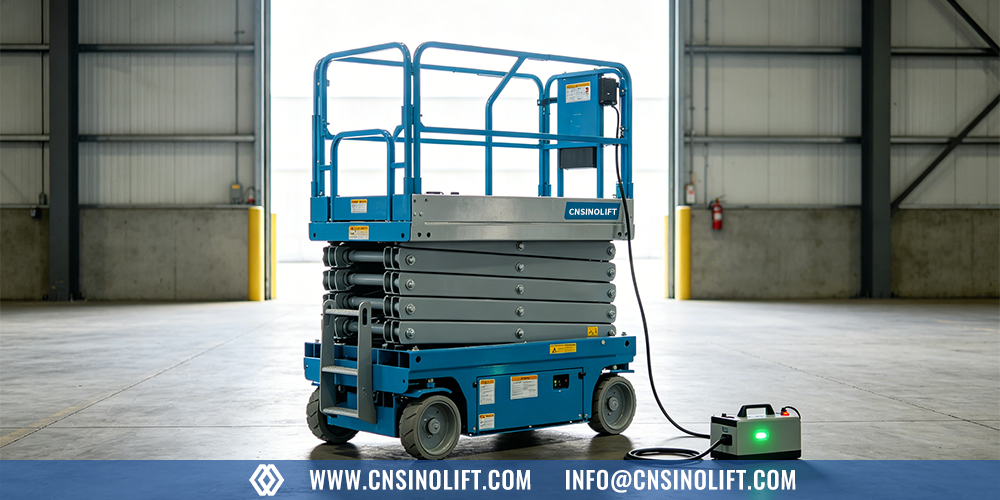
Most self-propelled electric scissor lifts use deep-cycle lead-acid batteries to power both driving and lifting functions.
Under normal operating conditions, operators can generally expect:
However, actual battery life varies significantly from one application to another.
A warehouse lift operating only a few hours per day may continue using its original battery pack for more than five years. By comparison, a rental fleet machine operating across multiple shifts may reach the end of its battery life much sooner.
* Based on field observations and typical industry data; actual life may vary with usage and conditions.
Many buyers searching for battery life are actually asking another question:
How long can a scissor lift operate before it needs recharging?
The answer depends on platform height, load weight, driving frequency, ground conditions, and battery condition.
| Application Type | Typical Runtime |
|---|---|
| Light Indoor Work | 8–10 Hours |
| Medium-Duty Operation | 6–8 Hours |
| Heavy-Duty Operation | 4–6 Hours |
For most warehouse, factory, and facility maintenance applications, a fully charged battery can comfortably support a complete work shift.
Many buyers focus on purchase price when comparing scissor lifts, but battery lifespan can have a significant impact on long-term ownership costs.
A battery replacement may cost hundreds or even thousands of dollars depending on machine size and battery configuration.
When battery life is extended from three years to five years through proper maintenance and charging practices, annual ownership costs decrease significantly.
Longer battery life also means less equipment downtime, lower maintenance expenses, more predictable operating costs, higher equipment availability, and better return on investment.
For businesses operating multiple lifts, even a small increase in battery lifespan can generate meaningful cost savings over time.
Besides battery performance, picking a suitable scissor lift for your needs is also crucial. Feel free to refer to our selection guide for your reference.
The number of operating hours per day directly affects battery lifespan. Machines used occasionally accumulate charging cycles much more slowly than equipment operating continuously.
| Daily Operating Time | Typical Battery Life |
|---|---|
| 1–2 Hours Per Day | More Than 5 Years |
| 3–4 Hours Per Day | 4–5 Years |
| 6–8 Hours Per Day | 3–4 Years |
| Multiple Shifts Daily | 2–3 Years |
This explains why warehouse operators often achieve longer battery life than construction contractors or rental companies.
| Industry | Typical Battery Life |
|---|---|
| Warehouse Operations | 4–5 Years |
| Manufacturing Plants | Around 4 Years |
| Shopping Mall Maintenance | 4–5 Years |
| Airport Maintenance | Around 4 Years |
| Construction Sites | 2–4 Years |
| Rental Fleets | 2–3 Years |
Indoor applications generally achieve longer battery life because equipment operates in cleaner environments and follows more consistent charging schedules.
A logistics customer in Santiago, Chile, uses a GTJZ10 self-propelled electric scissor lift for daily inventory management and facility maintenance. The machine runs approximately 4 hours per day and is charged after each shift. Thanks to consistent charging and indoor conditions, the original battery pack remained in service for nearly five years.
A manufacturing plant in Lima, Peru operates a GTJZ08 scissor lift for equipment inspection and light maintenance. The clean indoor environment and routine battery care helped the battery system deliver reliable performance for more than four years.
In a large‑scale construction project in Riyadh, Saudi Arabia, a GTJZ12 scissor lift works outdoors under high temperatures and long daily shifts. Although the machine is mechanically reliable, the demanding environment naturally results in a shorter battery lifespan than most indoor applications.
Many buyers are less interested in theoretical battery lifespan and more interested in real-world expectations.
Based on customer feedback from various industries, most self-propelled electric scissor lifts achieve approximately four years of battery service before replacement becomes necessary.
Machines used primarily indoors often exceed this figure, while rental fleets and construction sites generally require battery replacement sooner because of heavier workloads and more frequent charging cycles.
Charging Habits: Consistent charging after each work shift helps maximize battery lifespan.
Daily Usage: Higher operating hours result in more charging cycles and faster battery aging.
Maintenance Quality: Routine inspections help identify issues before they affect performance.
Operating Temperature: Excessive heat accelerates battery wear and reduces service life.
Storage Conditions: Proper storage helps prevent unnecessary battery degradation during periods of inactivity.
Many batteries fail long before reaching their expected lifespan because of poor charging habits or insufficient maintenance.
Battery replacement is a normal part of equipment ownership. Common warning signs include:
Waiting too long may lead to reduced productivity, unexpected downtime, and higher maintenance costs.
In most cases, replacing the battery is far more economical than replacing the entire machine. Battery replacement is considered routine maintenance and can restore much of the equipment's operating performance when the lift is otherwise in good condition.
However, if the machine is experiencing multiple major issues beyond battery performance—such as hydraulic system problems, structural damage, or electrical failures—it may be worth evaluating whether replacement of the entire lift makes more financial sense.
For most well-maintained scissor lifts, replacing the battery remains the most cost-effective solution.
Replacement costs vary depending on machine size, battery configuration, and local market conditions. For most self-propelled electric scissor lifts, a complete battery replacement typically costs between:
Although replacement represents a significant maintenance expense, proper battery care can often delay replacement and reduce long-term ownership costs.
* Cost estimates are indicative and based on market research and customer reports; actual prices may vary by region and battery type.
Simple maintenance habits can often add years to battery service life.
HENAN SINO LIFT CO., LTD produces self-propelled electric scissor lifts with working heights from 3m to 16m. They come standard with maintenance-free batteries, which require no water refilling, reducing later maintenance work.
HENAN SINO LIFT is committed to providing customers with high-quality and high-performance industrial equipment. Over the years, we have adhered to technological innovation and product quality, earning the trust and support of our customers.
We manufacture Scissor Lift, Mast Lift, Boom Lift, Cargo Lift, Loading Ramp, Wheelchair Lift, Warehouse Handling Equipment. If you need these products, please let me specify a suitable solution for you.
If you need assistance selecting the right model for your application, our team is ready to provide technical recommendations and professional support.
So, how long do scissor lift batteries last?
For most electric scissor lifts, a properly maintained lead-acid battery system will provide 3–5 years of reliable service, while many indoor applications can achieve even longer battery life.
Based on real-world customer feedback, most operators can realistically expect around four years of dependable battery performance before replacement becomes necessary.
By following proper charging and maintenance practices, businesses can reduce downtime, lower ownership costs, and maximize the return on their equipment investment.