Yes, some scissor lifts can move while elevated—but only when the specific model is designed and approved for elevated travel, and only under strict operating conditions. Many machines require the platform to be fully lowered before any movement. For electric scissor lifts specifically, learn more about when elevated movement is permitted.
Whether travel is allowed with the platform raised depends on the specific model and its operating instructions. Never assume that two lifts with similar specifications have the same capability. If the operator's manual does not explicitly permit elevated travel, lower the platform before repositioning.
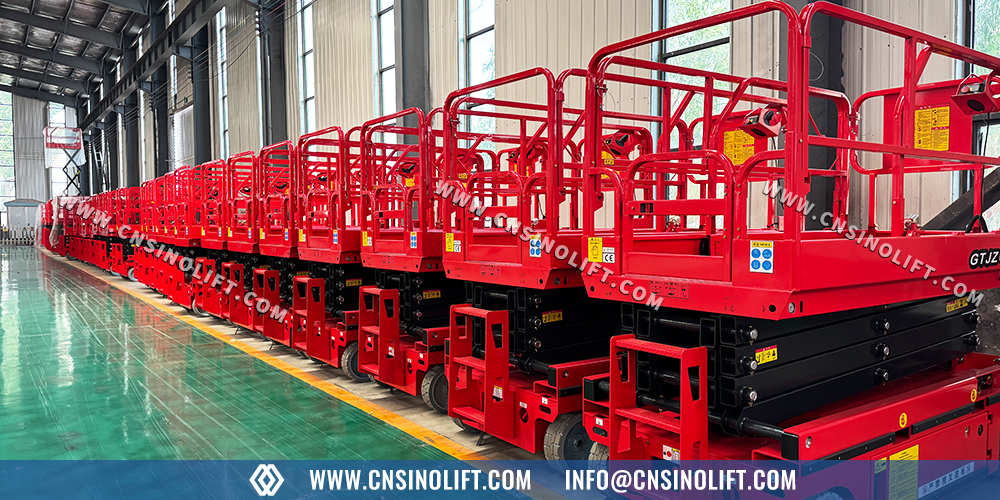
The model-specific examples and specifications referenced in this article are based on SINO LIFT's self-propelled electric scissor lift range (GTJZ series).
Before driving an elevated scissor lift, check the manufacturer's manual for:
Some self-propelled models automatically reduce speed when raised; others may disable travel above a certain height. On SINO LIFT's GTJZ-series self-propelled electric scissor lifts, travel speed drops from 3.5 km/h with the platform folded to a 0.8 km/h creep speed with the platform raised. The manual is the final authority.
This is a common secondary concern. Some self-propelled scissor lifts are designed for occupied travel, but only when the manufacturer permits it. Check the manual for occupancy restrictions before moving with any person on the platform. Can you operate a scissor lift by yourself? Read our guide to understand solo operation requirements and safety considerations.
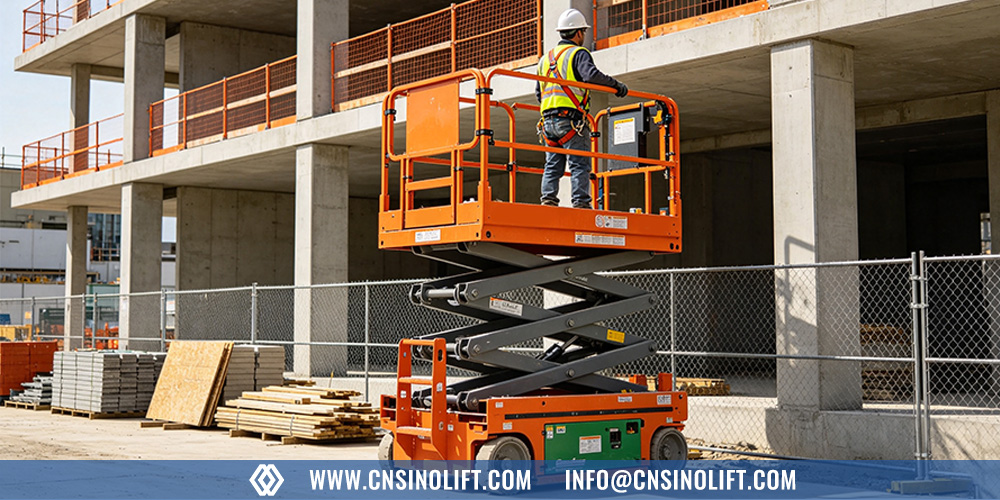
OSHA does not impose a blanket ban on elevated scissor-lift travel. For construction, scissor lifts fall under OSHA's scaffold requirements (29 CFR 1926.452(w)), not the aerial-lift provisions of 29 CFR 1926.453. OSHA emphasizes following the manufacturer's instructions and maintaining stable operating conditions.
In short: manufacturer rules override assumptions—OSHA points to the manual as the primary safety guide.
Raising the platform changes stability and handling. Even approved machines must stay within strict limits.
Tip-over risk – bumps, holes, slopes, sudden steering, acceleration, or braking are magnified at height. Do electric scissor lifts tip over easily? Understanding the factors that contribute to tip-over incidents is essential for safe operation.
Uneven ground – potholes, soft soil, curbs, drop-offs, and debris can destabilise the lift. Only travel on surfaces permitted by the manufacturer.
Collision hazards – the elevated platform increases overall height, so watch for ceiling beams, pipes, lighting, doorways, shelving, other equipment, and power lines.
Load shifts – tools and materials can move during travel; keep total weight (operators + tools + materials) within the rated capacity.
Wind – outdoor wind becomes a major factor. For outdoor operation, check the manufacturer's wind-speed limit first. OSHA's scissor-lift guidance references 28 mph (45 km/h) as a general benchmark, but the manufacturer's limit for a specific machine may be lower. Always follow the more restrictive value.
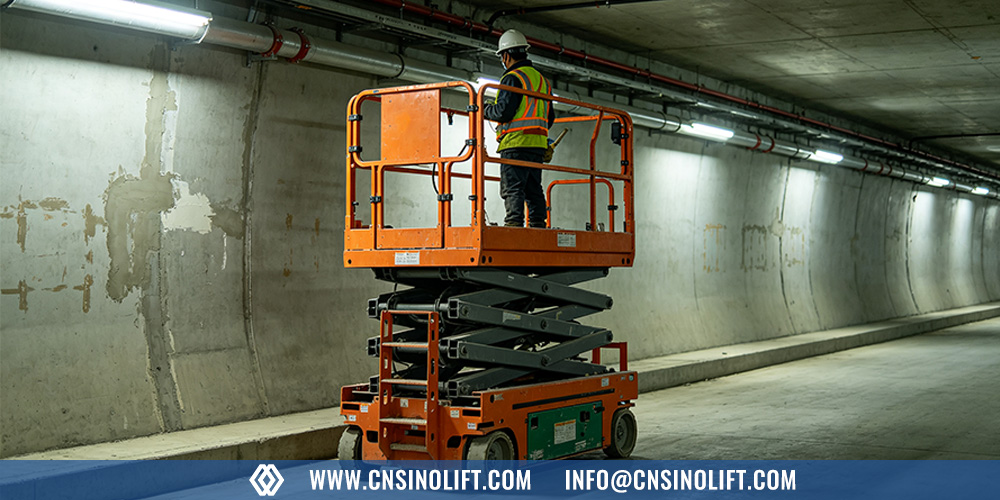
Elevated travel is appropriate only when all these conditions are met:
| Type | Elevated travel capability |
|---|---|
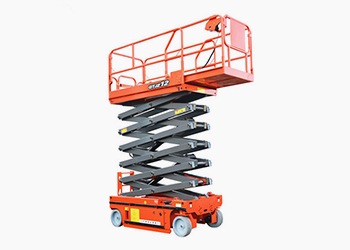
| Self-propelled electric (GTJZ06–GTJZ16) | Supported at a 0.8 km/h creep speed |
| Rough-terrain (GTJZ8RE–GTJZ20RE) | Stowed-state travel only |
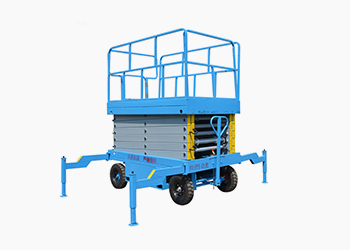
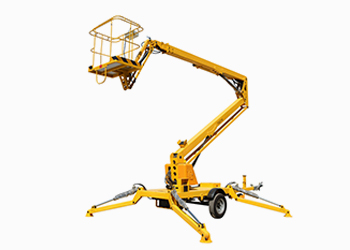
| Towable (SJY0.3–SJY2.0 series) | Not self-propelled |
Electric and rough-terrain models may have different capabilities, but the machine's design and manufacturer instructions—not its power source alone—determine whether elevated travel is permitted.
If elevated travel is approved, treat this as a controlled procedure. Before moving, stop and check three things:
Machine – Is elevated travel permitted at the current height? Are all interlocks working?
Route – Are there holes, debris, people, vehicles, or overhead obstacles? Is the surface firm and level?
Conditions – Is the load within capacity? Is the weather (wind, rain, etc.) within the manufacturer's limits?
Then:
Always lower the platform before travelling if:
If in doubt, lower it, then check the manual. Never bypass safety devices just to keep the lift raised while moving.
Is it ok to drive a scissor lift with the lift up?
Only if the manufacturer's instructions allow it. Check height, speed, slope, load, and environmental conditions first.
Can a scissor lift move while elevated?
Yes, but only if the specific model is designed and approved for it. Many require lowering before moving.
Does OSHA prohibit moving a scissor lift while elevated?
Not universally. OSHA treats scissor lifts as scaffolds and emphasises following manufacturer instructions and maintaining stable conditions.
Can you move a scissor lift with someone on the platform?
Some self-propelled models are designed for occupied travel, but only when the manufacturer permits it. Check the manual.
Can you drive on a slope while elevated?
Only if the slope is within the manufacturer's specified limit. Never assume a rough-terrain model can handle any slope while raised.
What wind speed is too high?
Follow the manufacturer's wind limit first. OSHA references 28 mph as a general benchmark, but the machine-specific limit may be stricter.
What if the manual doesn't mention elevated travel?
Treat that as a prohibition. Lower the platform before moving, or contact the manufacturer for clarification.
A scissor lift can move while elevated only when the specific machine is designed and approved for it. For most situations, the safest default is:
Lower the platform before moving.
If elevated travel is permitted, stay strictly within the manufacturer's limits for height, speed, load, ground conditions, slope, and weather. Use elevated travel only when it is an intended function of the machine and the conditions are suitable.
If your workflow requires frequent repositioning at height, choose equipment specifically engineered for that purpose rather than operating a standard scissor lift outside its intended conditions.
HENAN SINO LIFT is committed to providing customers with high-quality and high-performance industrial equipment. Over the years, we have adhered to technological innovation and product quality, earning the trust and support of our customers.
We manufacture Scissor Lift, Mast Lift, Boom Lift, Cargo Lift, Loading Ramp, Wheelchair Lift, and Warehouse Handling Equipment. If you need these products, please contact us and let us specify a suitable solution for you.
Email: info@cnsinolift.com
Website: www.cnsinolift.com