Choosing between a standard and a narrow scissor lift is not simply a matter of size. The right machine must fit your access route, provide sufficient capacity and working height, and suit your floor and operating conditions.
A narrow scissor lift is often a practical choice for warehouses, data centers, retail stores, and other space‑restricted indoor applications. A standard scissor lift may be better when you need more platform space, higher capacity, or a larger working area.
So which one should you choose? Start with access, capacity, height, maneuverability, and operating environment.
The model examples and specifications referenced in this guide are drawn from HENAN SINO LIFT's product range to provide practical, real-world context.
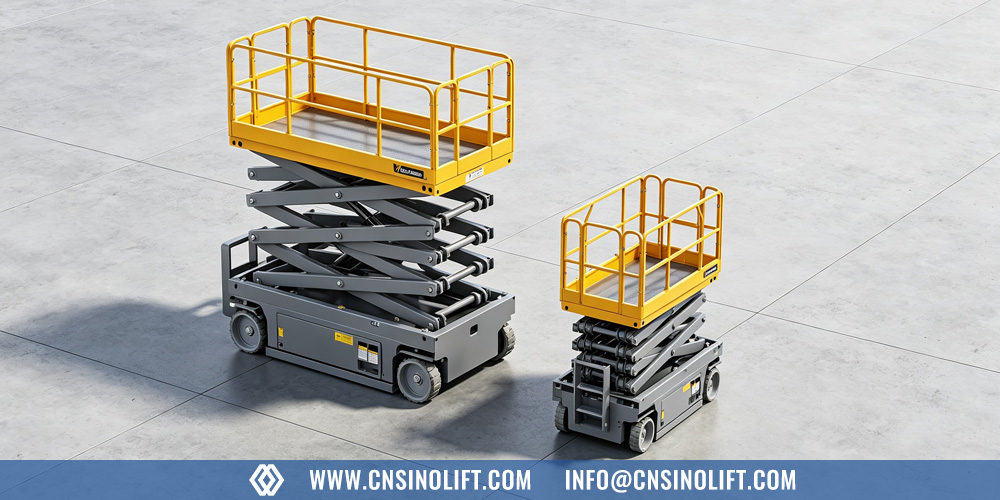
There is no single universal width that defines a scissor lift as "standard" or "narrow." Manufacturers offer different sizes and configurations, so always check the specifications of the actual model.
| Factor | Standard Scissor Lift | Narrow Scissor Lift |
|---|---|---|
| Overall width | Generally wider | More compact |
| Platform space | Generally larger | More compact |
| Load capacity | Often higher | Often lower |
| Maneuverability | Best in open areas | Better in confined areas |
| Doorway access | May require wider access | Many models suit standard‑sized doorways |
| Indoor use | Depends on model | Commonly used |
| Outdoor use | Some models are designed for it | Model‑dependent |
| Power | Electric and other options | Commonly electric |
Important: When checking access, use the overall machine width, not the platform width.
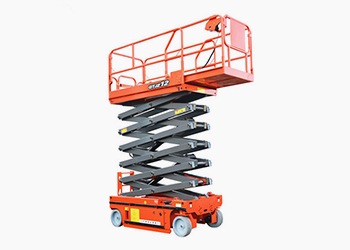
A standard scissor lift, also called a wide or full‑size scissor lift, generally provides a larger platform and higher capacity than compact models.
Its wider chassis makes it better suited to open indoor areas, large warehouses, construction sites, and other applications where access restrictions are less important.
Depending on the model, standard scissor lifts may be electric or combustion‑powered and may be designed for indoor, outdoor, or rough‑terrain applications. In our electric standard range, for example, working heights span from 7.8 m to 17.8 m, with platform capacities ranging from 227 kg to 550 kg and overall widths varying from 1.19 m up to 1.56 m.
Typical uses include:
A narrow scissor lift is designed for applications where access and maneuverability are major constraints.
Its compact dimensions make many models suitable for moving through standard‑sized doorways, narrow aisles, corridors, and other restricted areas. Most narrow models are electric, making them well suited to indoor environments where low noise and zero direct exhaust emissions are important. To explore our full range of self-propelled electric scissor lifts, visit our product page.
Our narrow-body range includes the Mini GTJZ06M, which offers an overall width of 0.84 m, a maximum working height of 7.8 m, and a safe working load of 230 kg, while the GTJZ08Z narrow-body model offers an overall width of 0.84 m, a maximum working height of 9.8 m, and a safe working load of 230 kg.
Common applications include:
A narrow lift should not be selected based on width alone. Its working height, platform capacity, machine weight, turning radius, and operating conditions must also match the job.
This should usually be your first check.
Measure:
A machine that fits through the entrance may still be unable to turn into a corridor or reach the work area. For a detailed discussion on doorway passability, read our article: Will a scissor lift fit through a door?
Tip: Compare the actual clear opening with the manufacturer's overall machine width.
Calculate the complete load:
Workers + tools + materials + accessories
If you need several workers or heavier materials on the platform, a standard model may offer a better solution.
If the application involves one or two workers with light tools and materials, a narrow lift may provide sufficient capacity.
Never exceed the manufacturer's rated platform capacity. To learn more about how operator weight affects capacity and stability, see our guide: Electric scissor lift capacity vs. operator weight.
Do not choose a lift based on height alone.
First determine:
Both standard and narrow scissor lifts are available in different height ranges. The best choice is the model that meets your height requirement without compromising access or capacity.
Also check whether the manufacturer uses "platform height" or "working height" when comparing specifications, as these terms are not identical.
A narrow machine is not automatically better just because it is narrower.
Check:
Narrow scissor lifts are generally advantageous in confined spaces, while standard models can be more productive when the work area is open.
For indoor applications, electric scissor lifts are commonly preferred because they produce no direct exhaust emissions and generally operate more quietly.
For outdoor work, check whether the specific model is rated for the ground conditions. If the site includes gravel, slopes, uneven ground, or other challenging surfaces, you may need a scissor lift specifically designed for rough‑terrain applications. To compare power options, read our guide: Electric vs diesel scissor lift: which one to buy?
For rough or uneven ground, our rough-terrain series (GTJZ8RE through GTJZ20RE) provides maximum working heights from 9.8 m to 22 m and safe working loads from 320 kg to 500 kg.
Do not assume that every standard lift is suitable for outdoor terrain or that every narrow lift is indoor‑only.
Machine weight matters when working inside existing buildings.
Before bringing a lift into a facility, verify:
This is particularly important in data centers, shopping centers, hospitals, office buildings, and other facilities with access or floor restrictions. If you are concerned about operating on delicate surfaces, read our article: Can you use an electric scissor lift on tile without causing damage?
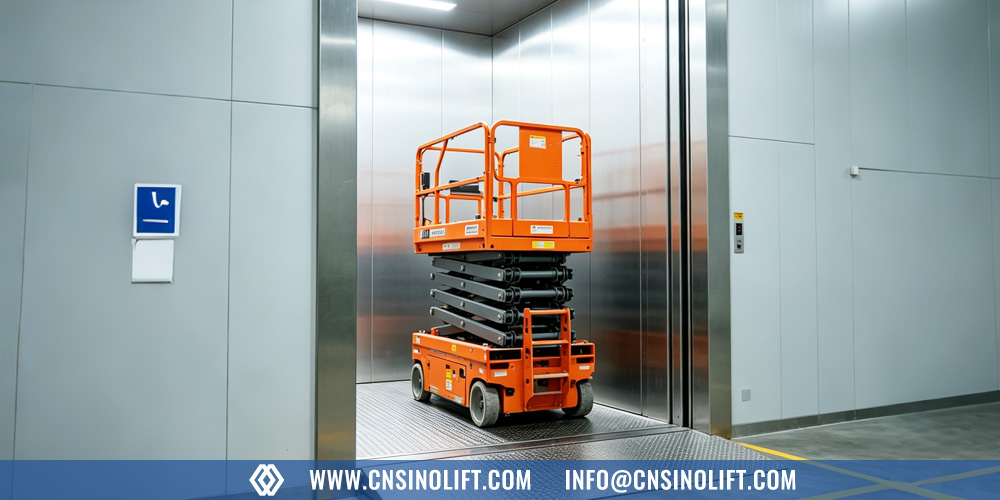
A narrow scissor lift is generally the better option when accessibility and maneuverability are more important than maximum capacity or platform space.
Consider one when:
For example, a maintenance team working in a data center may need to move between rooms and equipment areas through restricted access points. A compact electric scissor lift such as the Mini GTJZ06M or GTJZ08Z can be a practical solution if its dimensions, capacity, working height, and floor requirements meet the facility's specifications.
A standard scissor lift is generally more suitable when platform space, load capacity, or open‑site productivity is the priority.
Consider one when:
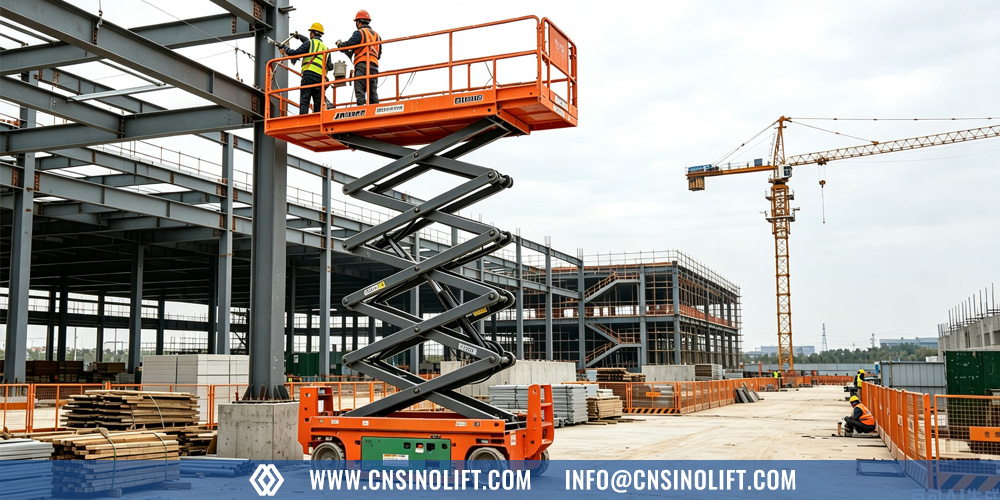
For example, on a large construction site with wide access points and several workers, a standard scissor lift such as the GTJZ08 or GTJZ10 can provide the platform space and capacity needed for installation or maintenance work.
A lift can reach the required height but still fail to enter the building or reach the work area.
Better approach: Check access first, then confirm height and capacity.
Getting through the entrance does not mean the lift can navigate the entire route.
Better approach: Measure doors, aisles, corridors, elevators, and turning areas.
Workers are only part of the load.
Better approach: Include people, tools, materials, and accessories in your capacity calculation.
A narrow lift may fit perfectly but still lack the required capacity, height, or floor compatibility.
Better approach: Treat width as one selection factor—not the only one.
| Your Priority | Better Starting Point |
|---|---|
| Restricted doorways or aisles | Narrow scissor lift |
| Limited turning space | Narrow scissor lift |
| Indoor maintenance | Narrow electric lift is often practical |
| Larger platform | Standard scissor lift |
| Higher capacity | Standard scissor lift |
| Multiple workers | Standard scissor lift |
| Open work areas | Standard scissor lift |
| Rough outdoor terrain | Model specifically rated for rough terrain |
This is a starting point, not a substitute for checking the manufacturer's specifications.
It depends on the actual machine and doorway dimensions. Many standard models are wider than typical single‑door clear openings, while many narrow models are designed for restricted access.
Always measure the clear opening and compare it with the machine's overall width. For more details, see our guide: Will a scissor lift fit through a door?
Not necessarily. Stability depends on the machine's design, rated capacity, ground conditions, platform position, and operating conditions.
The machine must always be operated within the manufacturer's specified limits.
Some models can, but outdoor capability depends on the specific design and manufacturer's rating. Many compact electric models are intended primarily for firm, level surfaces.
For uneven or rough terrain, choose a model specifically designed for those conditions.
A narrow electric scissor lift is often more practical when doorways, aisles, turning areas, or floor conditions are restrictive.
A standard electric model can be a better choice when the indoor area is open and greater platform capacity or workspace is required.
Provide as much of the following as possible:
With this information, a supplier can recommend a configuration that matches your actual worksite requirements. For budgeting guidance, check our scissor lift price guide.
There is no universally better choice between a standard and narrow scissor lift.
Choose a narrow scissor lift when access, compact dimensions, and maneuverability are your main concerns.
Choose a standard scissor lift when you need more platform space, higher capacity, or a configuration suited to a larger work area.
Before making a decision, verify these six points:
Access → Width → Capacity → Height → Environment → Floor
If you are unsure which configuration fits your project, please send us your required working height, platform load, doorway width, aisle width, and working environment. Our team will recommend a suitable scissor lift configuration based on your application. For a comprehensive overview of the selection process, read our scissor lift purchasing guide.
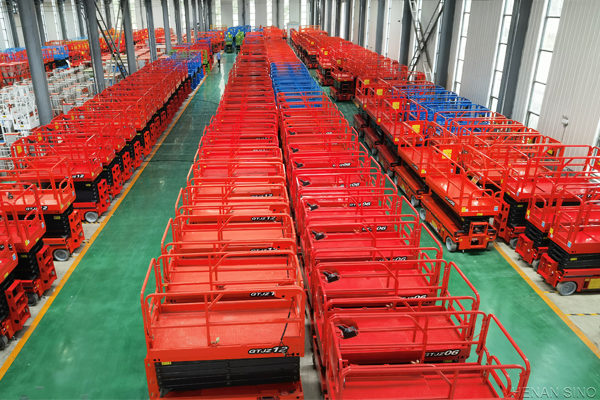
HENAN SINO LIFT CO., LTD is committed to providing customers with high‑quality, high‑performance industrial equipment. Over the years, we have adhered to technological innovation and product quality, earning the trust and support of our customers.
We manufacture Scissor Lifts, Mast Lifts, Boom Lifts, Cargo Lifts, Loading Ramps, Wheelchair Lifts, and Warehouse Handling Equipment. If you need any of these products, please let us know and we will specify a suitable solution for you.
If you have any questions or need further assistance, please do not hesitate to reach out:
Our team is always ready to help—we look forward to hearing from you. Request a quote today.