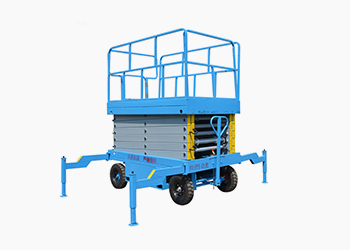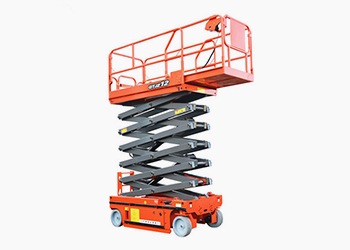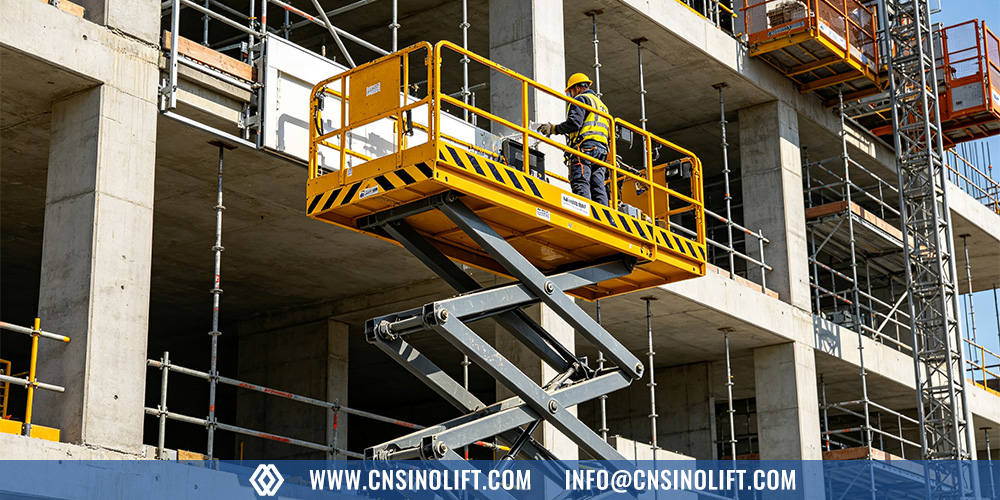
The hydraulic system plays a key role in the safe and reliable operation of a scissor lift. The hydraulic pump, cylinders, valves, hoses, and reservoir work together every time the platform rises. When one part fails, the machine can stop working, and in some cases it can create a safety risk.
This guide focuses on the hydraulic system of self-propelled scissor lifts. It covers three main areas: hydraulic oil, hydraulic leaks, and common hydraulic problems. The equipment information and maintenance guidance in this article are based on SINO LIFT self-propelled scissor lift documentation and general hydraulic maintenance practices. Because configurations differ by model and market, always use the manual supplied with your machine for final service decisions.
SINO LIFT’s self-propelled scissor lifts cover working heights of about 7.8–17.8 m, with rated working loads ranging from 230 to 550 kg depending on the model. Hydraulic oil specifications, capacities, and service intervals vary by machine, so always check the model-specific manual.
Most self-propelled scissor lifts rely on hydraulics for lifting, lowering, holding the platform, and in many models, steering and drive functions. A neglected scissor lift hydraulic system can lead to:
Regular oil checks, leak inspections, and early troubleshooting are simpler and less costly than replacing pumps, cylinders, or valve blocks. They also help keep the machine within inspection and safety requirements. If you are still deciding between different lift configurations, our guides on self-propelled vs. towable scissor lifts and electric vs. diesel scissor lifts can help clarify which type fits your site conditions.
Inspection and maintenance requirements vary by country and machine type. In the United States, OSHA and ANSI/SIA requirements apply. In other regions, follow local regulations and the machine manual.
Hydraulic oil transfers power, lubricates moving parts, helps control operating temperature, and maintains proper sealing between internal components. Dirty, degraded, or incorrect oil is one of the main causes of pump wear, valve blockage, and slow lifting.
Always use the oil specified in the operator’s manual. Do not use engine oil or unrated industrial oil in a scissor lift hydraulic system. For many self-propelled scissor lifts, ISO VG 32 or ISO VG 46 anti-wear hydraulic oil is commonly used, but the correct grade depends on the machine design and operating conditions.
| Oil Type | Typical Use | Key Properties |
|---|---|---|
| ISO VG 32 anti-wear hydraulic oil | Standard indoor/outdoor use, moderate temperatures | Good oxidation stability, anti-wear additives |
| ISO VG 46 anti-wear hydraulic oil | Higher ambient temperatures, heavier duty cycles | Thicker film strength, better load capacity |
| Low-temperature or high-viscosity-index hydraulic oil | Cold storage, winter outdoor work | Maintains flow at low starting temperatures |
| Biodegradable hydraulic oil | Environmentally sensitive areas, indoor work | Non-toxic, breaks down naturally |
Hydraulic oil viscosity should be selected according to the manufacturer’s specification and the expected ambient and operating temperatures. In colder environments, a lower-viscosity or high-viscosity-index hydraulic oil may be required. In consistently hot environments, a higher-viscosity oil may be appropriate, but the correct grade should always be confirmed in the machine manual.
Avoid mixing hydraulic oils with different specifications or additive packages unless their compatibility has been confirmed by the manufacturer. Additives can react with each other, form sludge, reduce lubrication performance, and damage seals.
For machines in daily use, check the oil level before each shift. For light-duty or intermittent use, check weekly and before operation after storage.
Do not overfill. Excess oil can cause overheating, foaming, seal pressure damage, and oil being pushed out through the breather.
Hydraulic oil change intervals vary by model, operating hours, environment, and oil condition. Follow the maintenance schedule in the machine manual. If the manual does not specify a clear interval, oil analysis can help set the right schedule for your fleet.
As a general reference, some fleets use intervals between 1,000 and 2,000 operating hours, or 12 to 24 months, depending on duty and environment. This is not a universal rule. Heavy use, dusty sites, high moisture, and high temperatures can shorten the interval.
Oil analysis can flag:
After long storage, check the oil condition before restarting the machine. If the oil is contaminated, milky, or has a burnt smell, change it before operation.
Dust, metal shavings, and water are common causes of hydraulic system damage. To prevent contamination:
Contaminated oil can cause serious problems inside the scissor lift hydraulic system, including scratched cylinder rods, clogged control valves, and repeated system failures.

Hydraulic leaks are one of the most common faults in scissor lift hydraulic systems. A minor weeping leak can grow into major fluid loss, pressure drop, and unexpected platform descent.
The most leak-prone points on a self-propelled scissor lift are usually:
Watch for these symptoms before they become major failures:
Oil spreads and travels, so the visible drip is rarely the source. Use a systematic process.
If the leak is very slow or intermittent, a service technician may use a leak detection method approved for the hydraulic oil and system components. Do not add unknown dyes or additives.
| Leak Source | Cause | Recommended Action |
|---|---|---|
| Loose fitting | Vibration, improper torque | Tighten to spec. Do not over-tighten JIC fittings; they seal on the flare face, not the threads. |
| Damaged hose | Cracks, blisters, abrasion, UV exposure, crimped fitting failure | Replace the whole hose with a high-pressure aerial-lift-rated hydraulic hose. Do not patch. |
| Cylinder rod seal leak | Worn seals, rod scratches, rust, dry shrinkage from long idle periods | Rebuild the cylinder with the correct seal kit, or replace the cylinder. If the rod is scratched or pitted, have it inspected and repaired or replaced according to the manufacturer’s requirements. |
| Pump shaft seal leak | Worn seal, scored shaft | Replace the seal and check the shaft for scoring. |
| Loose fittings and aging O-rings | Vibration, rubber hardening | Tighten to factory torque and replace aging O-rings and gaskets. |
| Rust-pitted cylinder rod | Moisture, lack of anti-rust maintenance | Have the rod inspected and repaired or replaced. Pitting can quickly damage replacement seals and cause the leak to return. |
Do not operate a lift with a visible hydraulic leak on load-bearing components. Weakened hoses and fittings can burst under full platform load.
Platform drift is a common complaint. It can come from a leaking cylinder piston seal, a faulty holding valve, a leaking lowering valve, or an internal leak in the hydraulic circuit.
Symptoms include:
Standard drift check:
If drift exceeds the manufacturer’s limit, inspect the piston seals, lowering valve, and holding valve. Excessive drift is a safety concern on many job sites.
Holding valve leak-down test:
Use the test point and pressure gauge specified by the manufacturer. Follow the service manual procedure for the leak-down test. Compare pressure loss and platform drift with the manufacturer’s allowable limits. If no test procedure is available, ask a qualified service provider to perform the test.
When replacing the holding valve cartridge, clean the area around the valve on the hydraulic manifold before disassembly. Use a magnet and lint-free cloth to remove debris from the valve cavity. Installing a new valve in a dirty port can cause it to fail early.
Always follow safety procedures before repairing hydraulic leaks:
Besides oil degradation and leaks, self-propelled scissor lifts can show hydraulic faults that affect normal operation. The table below covers common symptoms, likely causes, and first checks.
| Symptom | Likely Cause | First Checks |
|---|---|---|
| Platform rises slowly or will not lift | Low oil level; clogged suction strainer; weak pump; faulty relief valve; internal leaks | Check oil level; listen for whining or cavitation; test system pressure; inspect for leaks |
| Platform drifts down when raised | Leaking cylinder piston seal; faulty holding valve; leaking lowering valve | Measure drift over 10 minutes; inspect lowering valve; test holding valve per manual |
| Lift moves in jerks or chatters | Air in the system; low oil; contaminated oil; kinked hose | Bleed the system; check for foamy or milky oil; straighten or replace hoses |
| Pump whining or screaming | Cavitation or aeration | Check oil level, suction strainer, and suction hose |
| Oil appears milky or foamy | Water contamination or aeration | Change oil and filters; inspect cylinder rod seals and reservoir breather |
| Oil overheats | Relief valve stuck; continuous duty beyond rating; low oil | Check relief valve; verify duty cycle; check cooler function if fitted |
| Uneven lifting or scissor stack binds | Mechanical binding; low oil on one side in multi-cylinder systems; failed flow divider | Lubricate pivot points; check all cylinder oil feeds; test flow divider |
| Failure to lift to rated height | System pressure loss from leaks; insufficient oil; pump aging; valve blockage | Eliminate leaks; check pump; clean valve groups; perform full oil change and filtration |
Causes: Low hydraulic oil level, contaminated or clogged oil filters, kinked hydraulic hoses, internal component wear, or minor system leaks causing pressure loss.
Solutions: Start with the basics: check the oil level, filters, hoses, and visible leaks. If these are normal, have the system pressure and pump performance checked by a qualified technician.
Causes: Worn cylinder seals, faulty check valves, faulty holding valve, or internal hydraulic line leakage leading to pressure retention failure.
Solutions: Replace damaged cylinder seal kits, clean or overhaul hydraulic check valves, test the holding valve, and verify system pressure stability under rated load.
A high-pitched whine from the hydraulic pump can be a sign of cavitation or aeration. Common causes include low reservoir level, a clogged suction strainer, a kinked or collapsed suction hose, or oil that is too thick for the starting temperature.
Solutions: Check and refill oil levels, bleed air from the hydraulic loop, replace filters and degraded oil, and seal loose fitting points to prevent air intake.
If cavitation is left uncorrected, it can damage the pump. Metal particles from a failed pump can then contaminate the scissor lift hydraulic system, turning a small repair into a major overhaul.
Causes: Water contamination from condensation or bad seals, or aeration from loose connections.
Solutions: Change oil and filters. Inspect cylinder rod seals, reservoir breather, and all suction-side connections. Find and eliminate the water or air source before refilling.
Causes: Mechanical binding, low oil on one side in multi-cylinder systems, or a failed flow divider.
Solutions: Lubricate pivot points, check all cylinder oil feeds, and test the flow divider. If the issue persists, inspect the scissor arms and pins for mechanical damage.
Causes: Relief valve stuck, continuous duty beyond rating, low oil level, or restricted flow.
Solutions: Check relief valve operation, verify duty cycle, confirm oil level, and inspect cooler function if fitted. Use the correct viscosity grade for the operating conditions.
On electric self-propelled scissor lifts, some fault codes may point to hydraulic or lifting-related components, such as lift up/down coil errors, parallel valve coil errors, or pump motor errors. Other codes relate to drive, steering, brake, battery, or safety systems.
Use the fault code list in the machine manual to identify the affected circuit. Do not replace hydraulic parts based only on a code. Confirm the fault with pressure checks, oil condition checks, and a visual inspection.
Proactive maintenance costs less than emergency repairs. The schedule below focuses on hydraulic items. For a complete pre-use inspection routine that covers the whole machine, see our self-propelled scissor lift daily inspection checklist.
| Interval | Task |
|---|---|
| Daily / per shift | Check hydraulic oil level; look for leaks; listen for abnormal pump noise; test lifting and lowering |
| Weekly | Inspect hoses, fittings, and cylinders for chafing or damage; check oil condition |
| Monthly | Inspect hydraulic joints, hoses, tubing, and the reservoir for looseness, wear, cracks, or contamination. Tighten loose connections and replace damaged hoses or contaminated oil as required. |
| Quarterly | Check system pressure according to the manual; inspect relief valve operation; check oil condition |
| According to the Manufacturer’s Manual | Change hydraulic oil and filters; inspect cylinder seals; test load retention; check pump and motor condition |
Q: Can I use any hydraulic oil in my scissor lift?
No. Use only the viscosity grade and specification listed in the operator’s manual. Using the wrong grade can cause premature pump wear and seal damage.
Q: How often should I check scissor lift hydraulic oil?
For machines in daily use, check the oil level before each shift. For light-duty or intermittent use, check weekly and before operation after storage. Always follow the manual for your model.
Q: My lift works fine but the oil looks dark. Should I change it?
Dark oil alone is not always a problem because anti-wear additives can darken oil naturally. However, a burnt smell, milky appearance, or metallic particles mean immediate change and inspection.
Q: Is a small hydraulic leak a big deal?
Yes. Even a small leak can lead to fluid loss, contamination, slip hazards, and environmental problems if it is left unattended. Fix leaks as soon as they are detected.
Q: Can I mix different brands of hydraulic oil?
Avoid mixing oils with different specifications or additive packages unless compatibility has been confirmed by the manufacturer. Use one matched oil type where possible.
Q: What causes a scissor lift to drift down when stationary?
The main causes are worn cylinder rod seals, faulty hydraulic check valves, a faulty holding valve, or internal line leaks. Diagnosis and repair are needed to remove the drifting hazard.
Scissor lift hydraulic system maintenance comes down to three habits: keep the oil clean and at the right level, catch leaks early, and act on small symptoms before they become shutdowns. A well-maintained hydraulic system can extend service life and reduce repair costs, while also helping the machine stay safe and productive on site.
If you are still comparing models or planning a fleet purchase, the scissor lift purchasing guide and scissor lift price guide provide detailed selection criteria and cost references. If you need model-specific hydraulic maintenance information or spare parts support for SINO LIFT equipment, contact us to discuss your equipment requirements.
HENAN SINO LIFT is committed to providing customers with high-quality and high-performance industrial equipment. Over the years, we have adhered to technological innovation and product quality, earning the trust and support of our customers.
We manufacture Scissor Lift, Mast Lift, Boom Lift, Cargo Lift, Loading Ramp, Wheelchair Lift, and Warehouse Handling Equipment. If you need these products, please let us specify a suitable solution for you.