Yes — but only with a rough-terrain scissor lift, and only on gravel that is firm, compacted, and close to level. A standard indoor electric self-propelled scissor lift is not built for gravel and should stay on concrete or asphalt.
Gravel is one of the most common surfaces on construction, landscaping, and maintenance sites, but it behaves very differently from a paved floor. Knowing which machine can handle it, and how to operate it safely, is critical for preventing incidents on site. For a comprehensive overview of scissor lift selection, you may find additional guidance useful.
A scissor lift depends on all four wheels keeping firm, even contact with the ground. On concrete or asphalt, that is easy to guarantee. On gravel, three things work against you.
First, loose stones shift under load. As the machine's weight settles, individual stones move, and one side of the lift can drop lower than the other. This pushes the center of gravity toward the low side, which is exactly where a scissor lift is weakest.
Second, traction falls off. Smooth-floor tires generally provide less traction on loose gravel, especially on any slope. A machine that moves fine on a warehouse floor can spin or drift on a gravel driveway.
Third, soft spots hide under the surface. A freshly backfilled trench, a wet patch, or a thin layer of gravel spread over soft soil can give way without warning and drop a wheel suddenly.
These issues are much less common on a properly finished floor. That is why surface conditions and machine selection matter so much when working on gravel.
Not every scissor lift can handle gravel. The difference comes down to how the machine is built and what it's designed for. For a detailed comparison between electric and diesel options, see our electric vs. diesel scissor lift guide.
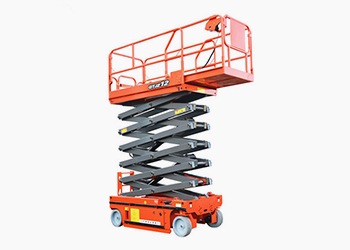
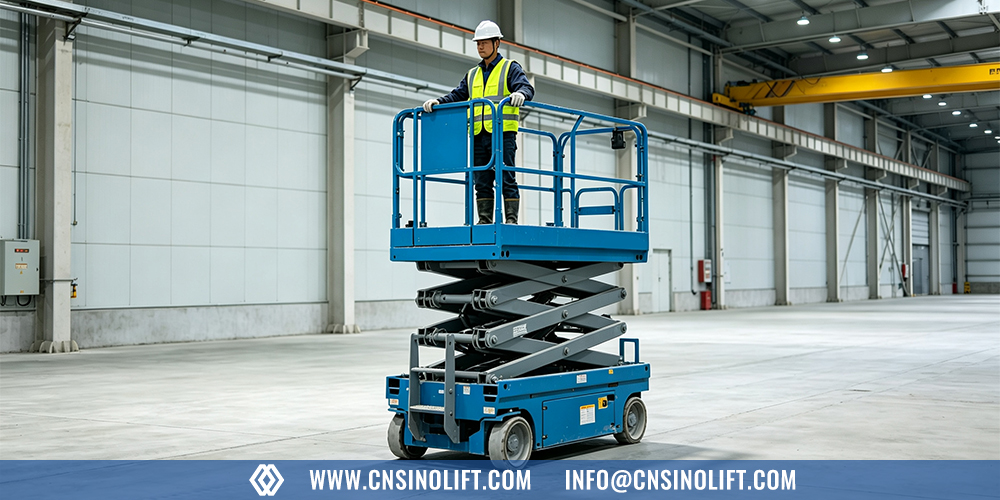
Indoor electric self‑propelled scissor lifts are built for smooth, hard, indoor surfaces: concrete, asphalt, and finished warehouse floors. They have solid tires, modest ground clearance, and no stabilization for loose ground.
SINO LIFT's GTJZ series is designed for smooth, hard surfaces such as concrete and asphalt. On loose gravel, they may lose traction, sink into the surface, or become unstable, so they are not intended for regular outdoor travel on this type of ground. If you are concerned about stability, you may want to read about whether electric scissor lifts tip over easily.
These machines should stay on pavement. If a job calls for crossing a short, compacted stretch of gravel, do it only at low speed, with the platform fully lowered, and only after confirming the surface is hard and level.
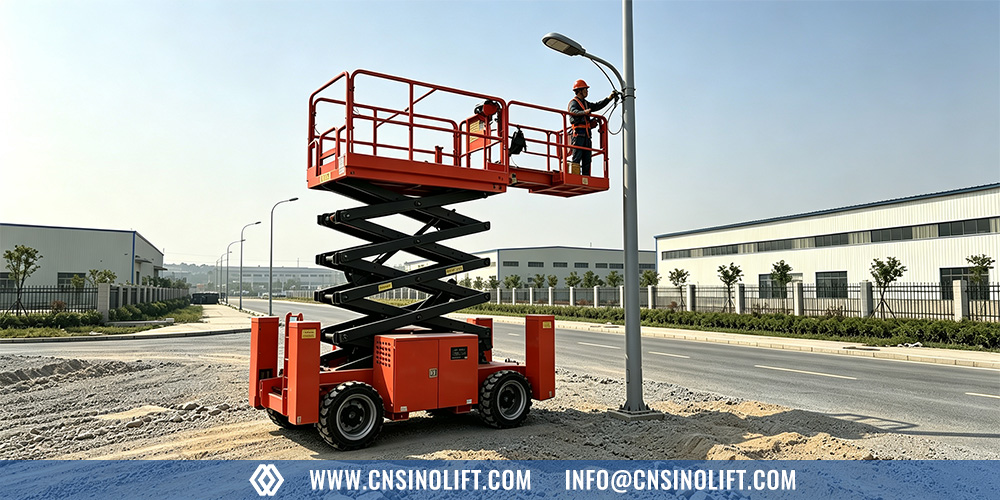
Rough‑terrain self‑propelled scissor lifts are built for outdoor sites: compacted gravel, dirt, and gently sloping ground. They carry larger solid tires with deep tread, a heavier frame, and higher gradeability than their indoor counterparts.
SINO LIFT's GTJZ RE series fills this role. The GTJZ12RE, for example, is the rough‑terrain counterpart to the GTJZ12. Two points stand out: the RE model is noticeably heavier — because it carries a stronger frame and larger tires — and the GTJZ12RE is battery‑driven (the RE series also includes diesel‑powered versions, available as needed). It keeps the quiet, emissions‑free operation of an electric lift while adding the tires and gradeability that gravel demands. To explore the full range of outdoor-capable machines, visit our rough‑terrain scissor lift product page.
Here is a direct comparison between the two electric models in the 12 m platform class:
| Specification | GTJZ12 (indoor self‑propelled) | GTJZ12RE (rough‑terrain) |
|---|---|---|
| Platform height | 11.8 m | 12 m |
| Working height | 13.8 m | 14 m |
| Rated load | 320 kg | 320 kg |
| Machine weight | 2870 kg | 3810 kg |
| Tires | Solid, smooth‑floor | 33×12‑20 solid, rough‑terrain |
| Battery | 4×6V/200Ah | 8×6V/260Ah |
| Gradeability | ~25% | ~30% |
| Surface | Concrete/asphalt | Compacted gravel, dirt |
The table shows why the GTJZ12RE can handle gravel while the GTJZ12 cannot. The RE model's heavier frame, larger tires with deeper tread, and higher gradeability are all design choices made specifically for soft or uneven outdoor surfaces. Pricing naturally varies between these two classes, so it is important to match the machine to your actual site conditions.
Even among rough‑terrain lifts, not every machine will suit every gravel site. Here are the key specifications to check.
Tire type. This is the most visible difference. A rough‑terrain lift uses large tires with deep tread — like the 33×12‑20 tires on the GTJZ12RE — to provide traction and flotation on loose stone. Smooth‑floor tires, by contrast, are designed to protect warehouse floors and maneuver in tight indoor spaces; they are not designed to grip gravel.
Machine weight. Heavier doesn't always mean better, but on gravel it often helps — up to a point. A heavier machine puts more pressure on the ground, which can help tires bite into compacted gravel for better traction. But if the gravel is too loose or soft, that same weight can cause sinking. The GTJZ12RE weighs 3810 kg, about 940 kg more than its indoor counterpart. That extra weight comes from a stronger frame and larger tires — both necessary for outdoor work.
Ground bearing. This is about the surface itself, not the machine. Firm, compacted gravel with a cleared path is a rough‑terrain lift's home turf. Deep, fresh, wet, or uncompacted gravel is a problem for any wheeled machine, however capable. Before driving on any gravel site, walk the path, check for soft spots, and confirm the surface can support the machine's weight.
Gradeability. This tells you how steep a slope the machine can climb while traveling with the platform lowered. Do not treat this number as the maximum safe slope for elevated operation. The GTJZ12RE is rated at about 30% gradeability, but the allowable slope for raising the platform and performing work is almost always lower. Always follow the manufacturer's allowable slope limits for driving, lifting, and parking. When in doubt, keep the ground flatter.
Platform height vs. working height. These are not the same. Platform height is how high the deck reaches; working height is how high an operator standing on the platform can reach with raised arms. On SINO LIFT scissor lifts, working height runs about 2 m above platform height — the GTJZ12RE reaches a 12 m platform and a 14 m working height. Choose the machine by working height, not platform height.
Walk the path before you drive it. Look for soft spots, ruts, potholes, and areas where the gravel is thin over soft soil. Check the slope in both directions with a level or inclinometer, and compare it against the manufacturer's limits for travel and for elevated operation — these are two different figures. Clear loose rocks, timber, and debris from the route.
If the gravel is fresh, deep, or waterlogged, compact it first, or lay steel plates, plywood, or ground mats to build a firm driving surface. A rough‑terrain lift handles firm gravel; it is not designed to operate on soft ground.
Once in position, confirm all four tires have firm contact and the machine is level. If the machine has outriggers, deploy them on firm ground with base plates under each foot. Watch the tilt alarm, but do not treat it as a level indicator — it sounds only at severe angles. Raise the platform only after the machine is positioned, leveled, and stable. For more on safe movement, see our article on moving the platform while elevated.
Even a rough‑terrain scissor lift has limits. If the gravel is deep, loose, wet, or spread over soft soil, or if the slope exceeds the machine's rating for elevated operation, do not force the issue. Options include compacting or grading the surface first, laying ground mats or steel plates, or switching to a different access method for the specific job. Being aware of common scissor lift accidents can help you avoid the most frequent pitfalls.
Can a standard electric scissor lift drive on gravel?
Not safely. Indoor self‑propelled lifts like the GTJZ series are designed for concrete and asphalt. On loose gravel, they may lose traction, sink into the surface, or become unstable. Keep them on pavement.
Which SINO LIFT scissor lift works on gravel?
The rough‑terrain GTJZ RE series. The GTJZ12RE pairs a 12 m platform with 33×12‑20 solid tires, an 8×6V/260Ah battery pack, and about 30% gradeability for compacted gravel and dirt.
Can I drive a scissor lift on gravel with the platform raised?
Generally, no. Travel with the platform fully lowered unless the manufacturer specifically permits elevated travel under defined conditions. On gravel, keeping the platform lowered provides greater stability and reduces the risk of tipping.
What slope is acceptable on gravel?
It depends on the machine's rating. A machine's gradeability rating (e.g., 30% for the GTJZ12RE) is not the same as its safe slope for elevated operation. The allowable slope for raising the platform is almost always lower. Check the chassis label or manual for both figures, and when in doubt, keep the ground flatter.
Can you drive a scissor lift on uneven ground?
A rough‑terrain scissor lift can operate on uneven ground within the limits specified by the manufacturer, but it should still be positioned on firm, stable ground before the platform is raised. Deep ruts, soft soil, holes, and excessive slopes can create a tip‑over or stability hazard.
Does a rough‑terrain scissor lift have to be diesel?
No, it doesn't have to be diesel. The GTJZ RE series includes both electric and diesel‑powered models. The GTJZ12RE, for example, is battery‑driven, while other models in the series are available with diesel engines. This gives you the flexibility to choose the power source that best suits your site requirements — electric for quiet, emissions‑free operation, or diesel for extended runtime and higher power demands.
Will gravel wear out the tires or the machine?
Repeated driving on loose, abrasive stone accelerates tire wear. The RE series uses large solid tires sized for this work, but a firm, compacted, debris‑cleared path will always reduce wear and tear.
A rough‑terrain scissor lift can be used on gravel when the surface is firm, stable, and within the manufacturer's operating limits. During travel, keep the platform lowered unless the manufacturer specifically permits elevated travel. For indoor concrete work, the indoor self‑propelled series is the right tool. For gravel and dirt, the rough‑terrain RE series is the one built for the surface. Match the machine to the ground, inspect the surface before you drive, and keep the platform down until the lift is in place and level.
Need a rough‑terrain scissor lift for a gravel site? Send us your required working height, the surface you will drive on (compacted gravel, dirt, or paved), the site slope, and whether the work is indoor or outdoor. Our team can recommend a suitable model for your needs. Contact us for personalised advice.
About HENAN SINO LIFT CO., LTD
HENAN SINO LIFT is a manufacturer of electric and hydraulic self‑propelled scissor lifts for indoor, warehouse, construction, and light industrial applications. We provide different platform heights, capacities, dimensions, and configurations for specific site requirements.
Our product range includes Scissor Lifts, Mast Lifts, Boom Lifts, Cargo Lifts, Loading Ramps, Wheelchair Lifts, and Warehouse Handling Equipment.
Email: info@cnsinolift.com
Website: www.cnsinolift.com