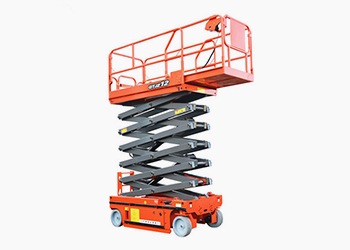
A 40-foot scissor lift typically weighs between 2,870 kg and 3,810 kg (6,327 to 8,400 lb). The lighter end applies to an electric self-propelled model, while the heavier weight is for a rough-terrain version with a reinforced chassis and a more powerful drive system.
Knowing the machine weight in advance helps you plan floor loading, transportation, and site access more accurately.
.png)
In the access industry, "40-foot" refers to the platform height, not the total working height. A 40-foot machine has a platform that rises about 12 meters (40 ft) above ground level.
Working height is always higher, because it includes the operator's natural reach from the platform. For SINO LIFT's 40-foot class, you can also check our comprehensive scissor lift purchasing guide to better understand height requirements across different models.
When selecting a machine, always start with the required working height, then confirm platform height—not the other way around.
All specifications and model data in this guide are sourced directly from SINO LIFT's official product documentation. Here are the official specifications for both configurations:
| Model | Type | Platform Height | Working Height | Rated Load | Machine Weight |
|---|---|---|---|---|---|
| GTJZ12 | Electric Self-Propelled | 11.8 m (38.7 ft) | 13.8 m (45.3 ft) | 320 kg (705 lb) | 2,870 kg (6,327 lb) |
| GTJZ12RE | Rough Terrain | 12 m (39.4 ft) | 14 m (45.9 ft) | 320 kg (705 lb) | 3,810 kg (8,400 lb) |
For context, weight increases steadily with height. The electric GTJZ10 and other self-propelled electric scissor lift models show how weight scales with platform height. The GTJZ10 weighs 2,530 kg, while the GTJZ14 reaches 3,340 kg. On the rough-terrain side, the GTJZ14RE comes in at 4,000 kg. Each step up in height requires more structure—and more structure means more weight.
This is a common point of confusion. SINO LIFT offers both electric and diesel options across its scissor lift range. The GTJZ12 and GTJZ12RE listed in this guide are the battery-powered versions, but diesel-powered variants are also available upon request. We support custom powertrain choices to match your specific site conditions and operational preferences.
For the battery-powered configurations shown in this guide:
Unlike some manufacturers that only offer diesel rough-terrain machines, SINO LIFT gives you the flexibility to choose the power source that best fits your application. If you're weighing the pros and cons of each, our comparison of electric vs. diesel scissor lifts provides a deeper breakdown of performance and other key factors.
Note: The following section compares the two electric models listed above. Diesel variants are available upon request with different specifications—please contact our sales team for detailed diesel model data.
The weight difference between the two models mainly comes from three areas:
Power and Drive System
Electric self-propelled lifts like the GTJZ12 use a lighter 24V drive layout with compact motors, keeping weight at 2,870 kg. Rough-terrain models need more stored energy and stronger motors. The GTJZ12RE carries a larger battery bank and more robust drive components, pushing weight to 3,810 kg.
Chassis, Tires, and Ground Clearance
Rough-terrain lifts are built for stability on uneven ground. That means more clearance, a longer wheelbase, a sturdier frame, and solid off-road tires instead of smooth indoor tires. The GTJZ12RE runs on 33×12-20 solid tires with 30% gradeability—compared to 25% on the self-propelled model. These reinforcements account for most of the added weight.
Platform and Accessories
Wider decks and roll-out extensions add some weight, but in this class, the chassis and drive system are the main factors—not the deck itself.
These two numbers are often confused, but they serve very different purposes:
For floor-loading calculations, always start with the machine weight, then add the rated load and the weight of the operators. Confusing these two—thinking the 320 kg rated load is the total weight—is the single most common mistake. Avoid it, and you're already ahead.
This is the practical section. Here's how machine weight affects real-world decisions:
Floor Loading
Indoor work on raised floors, mezzanines, or older slabs demands a load check before the machine arrives. A 2,870 kg electric self-propelled model is much easier to accommodate than a 3,810 kg rough-terrain unit—which is one reason indoor jobs default to electric machines. Always confirm floor load capacity in advance. For delicate indoor surfaces such as tile, you may also want to read our detailed answer on whether an electric scissor lift can be used on tile without causing damage.
Transport and Trailer Selection
Weight determines your trailer and towing vehicle. The GTJZ12 at 2,870 kg is well within the range of standard equipment trailers in most regions. The GTJZ12RE at 3,810 kg requires a trailer rated for the extra load. Before scheduling delivery, check the machine weight against your trailer's GVWR and confirm tie-down points are rated for the load. Heavier machines also increase freight costs, so this number affects your full delivery budget.
Site Access
Lighter, narrower machines move through standard doorways and freight elevators more easily. The GTJZ12 has an overall width of 1.19 m (about 47 in). However, width alone isn't enough—before moving indoors, compare the machine's actual width with the clear doorway width, and account for frame clearance, door hardware, and maneuvering space. For more on navigating tight spaces, see our guide on whether a scissor lift will fit through a door.
Stability and Wind
Outdoors, a heavier machine with a wider track and solid tires holds its ground better than a lighter slab unit. That's why rough-terrain models are specified for exposed sites. Always check the manufacturer's wind-speed rating before operating at full height in open areas.
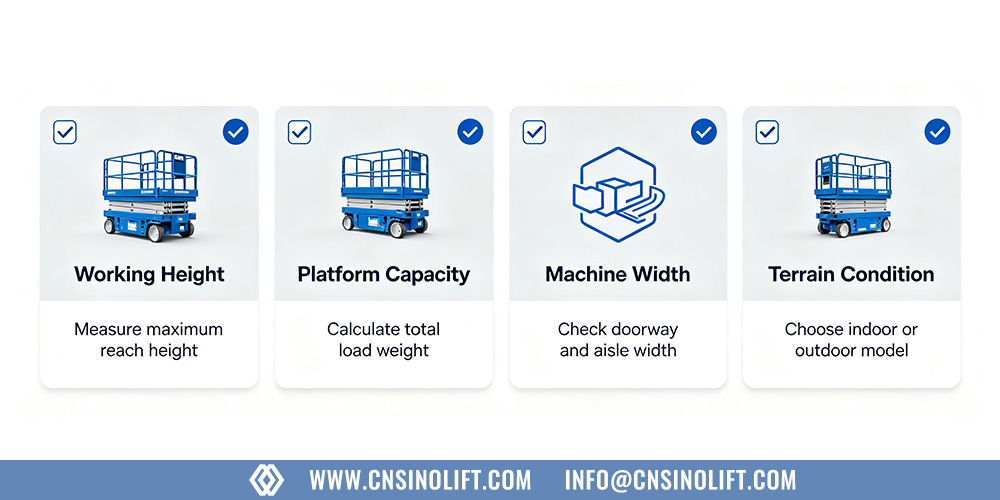
Work through these four questions, and the choice becomes clear:
SINO LIFT also offers mini scissor lifts (platform heights up to 4.8 m) and narrow scissor lifts (widths as low as 0.84 m) for lighter-duty or confined-space applications. However, neither series reaches 40 ft (12 m) platform height.
| Job Condition | Recommended Model | Key Reason |
|---|---|---|
| Indoor, smooth floor | GTJZ12 | Lightest (2,870 kg), electric drive, easy maneuvering |
| Outdoor, uneven or unpaved | GTJZ12RE | Solid tires, more clearance, 30% gradeability |
For a detailed guide on selecting the right size, our guide on what size scissor lift you need covers height, width, and capacity considerations in depth.
How much does a 40-foot scissor lift weigh in kilograms?
Between 2,870 kg and 3,810 kg, depending on whether it's an electric self-propelled or rough-terrain model.
How much does a 40-foot scissor lift weigh in pounds?
Between 6,327 lb and 8,400 lb. The GTJZ12 electric self-propelled model weighs 6,327 lb, while the GTJZ12RE rough-terrain model weighs 8,400 lb.
What is the working height of a 40-foot scissor lift?
For SINO LIFT models, working height is about 2 m higher than platform height. For example, the GTJZ12 has an 11.8 m platform height and a 13.8 m working height.
How much can a 40-foot scissor lift carry?
SINO LIFT's 40-foot models are rated for 320 kg (705 lb). This rating covers the combined weight of operators, tools, and materials within the specified capacity.
Do rough-terrain models weigh more than electric self-propelled models?
Yes. In the same height class, the rough-terrain version is 940 kg (2,072 lb) heavier, due to the reinforced chassis, solid tires, and larger drive system.
Can a 40-foot scissor lift be used indoors?
Yes—the electric GTJZ12 works well on smooth indoor floors, provided the floor can support roughly 2,870 kg. Rough-terrain models are generally kept to outdoor or unpaved sites.
How wide is a 40-foot scissor lift?
The GTJZ12 is 1.19 m (about 47 in) wide. Always compare this with your actual doorway clearance and allow room for maneuvering.
Still comparing 40-foot scissor lifts? For a more detailed cost breakdown, see our scissor lift price guide to better understand how weight, height, and features affect overall cost. Send us your required working height, doorway width, floor conditions, and job environment (indoor or outdoor). Our team will recommend the right configuration for your specific site.
About HENAN SINO LIFT CO., LTD
HENAN SINO LIFT manufactures electric and hydraulic scissor lifts for indoor, warehouse, construction, and light industrial applications. We provide tailored recommendations for platform height, load capacity, and configuration based on your specific working environment and site requirements.
Our product line includes Scissor Lifts, Mast Lifts, Boom Lifts, Cargo Lifts, Loading Ramps, Wheelchair Lifts, and Warehouse Handling Equipment.
Email: info@cnsinolift.com
Website: www.cnsinolift.com
For any further questions or to discuss your project in detail, please contact our team directly.