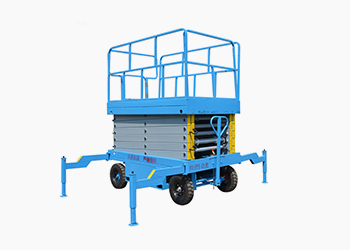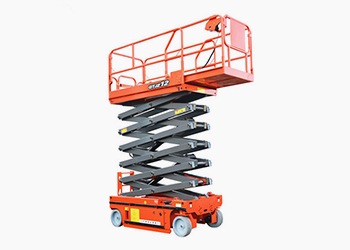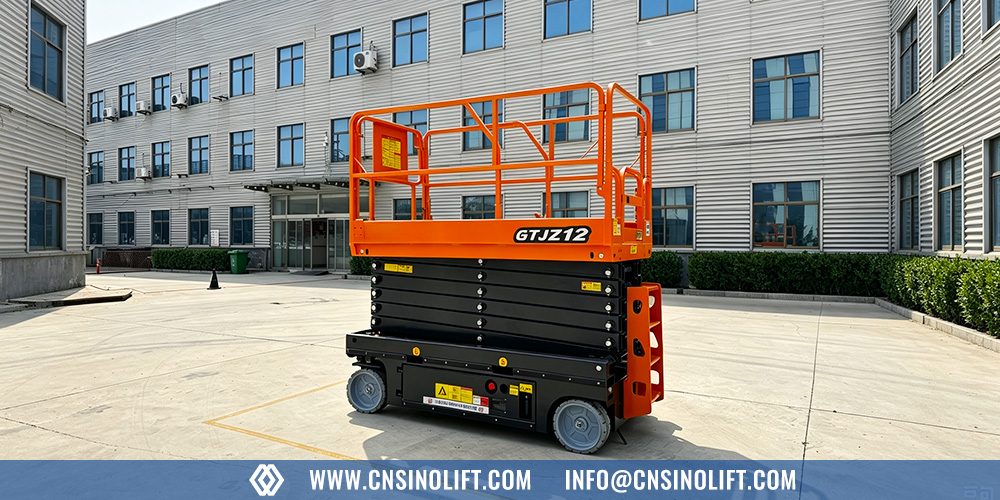
Self-propelled scissor lifts are used in construction, facility maintenance, warehousing, logistics and industrial cleaning. They combine lifting and driving functions in one machine, making daily work more flexible, but they also have more hydraulic, electrical and drive-system components to maintain. Frequent use, harsh job sites and irregular maintenance can lead to oil leaks, battery failure, control faults, drive problems and structural wear.
Repair costs can range from around $50 for a minor switch or sensor issue to several thousand dollars for major hydraulic or structural repairs. The actual cost depends on the machine model, the failed component, local labor rates, parts source and shipping. This guide looks at common problems, typical repair costs, maintenance practices and the main factors to consider when deciding whether to repair or replace a scissor lift. For a broader look at how to evaluate different models before a purchase, see our scissor lift purchasing guide.
Repair costs vary significantly depending on the type of failure, local labor rates, service call charges and the source of replacement parts. A relatively inexpensive component can still result in a high repair bill when diagnosis, travel, labor and installation are included.
The table below gives general repair-cost references for common repair types. These figures are not manufacturer part prices or fixed service quotes. The final cost can vary depending on the machine model, repair method, labor and shipping. For a broader overview of scissor lift pricing across different categories, see the scissor lift price guide.
| Repair Type | Typical Cost |
|---|---|
| Switch, Sensor or Minor Electrical Repair | $50–$250 |
| Tire or Wheel Replacement | $100–$400 |
| Hydraulic Hose or Seal Repair | $150–$600 |
| Charger Replacement | $250–$700 |
| Battery Replacement | $300–$800 |
| Motor Replacement | $500–$1,500 |
| Hydraulic Cylinder Repair or Replacement | $500–$1,500 |
| Controller / ECU Replacement | $500–$1,500 |
| Hydraulic Pump Repair or Replacement | $800–$2,000 |
| Main Valve Replacement | $800–$2,000 |
| Major Structural Repair | $1,500+ |
Parts cost also depends on the machine size and model. Always confirm the exact model, platform height and load capacity before ordering hydraulic, electrical or battery parts. Our self-propelled electric scissor lift product page lists available configurations and specifications.
Hydraulic, electrical, battery and drive faults are some of the most common service issues. The following are the problems operators and maintenance teams are most likely to encounter.
Symptoms: Oil stains on the ground, slow lifting, reduced load capacity, abnormal pump noise.
Causes: Worn seals, cracked hoses, loose fittings, damaged cylinder walls.
Solutions: Tighten loose joints for minor leakage. For larger leaks, replace seal kits and damaged hoses. Do not simply add oil without fixing the leak. That only hides the problem and can accelerate pump wear.
Cost level: Seal kits and hoses are usually low to moderate cost. A cylinder rebuild moves into the moderate to high range because it involves more labor and possibly a replacement cylinder.
Symptoms: Platform rises slowly, jitters, or cannot reach rated height.
Causes: Low hydraulic fluid, contaminated oil, clogged filter, blocked pipeline, low battery voltage.
Solutions: Check and replenish hydraulic fluid, replace deteriorated oil, clean the filter, inspect pipeline kinks, and test battery voltage.
Cost level: Fluid and filter service is usually low cost. If the pump or cylinder is worn, the repair moves to a higher cost level.
Symptoms: Battery loses charge overnight, starting is difficult, the machine stands by but cannot lift, working hours per charge are short.
Causes: Aging battery cells, faulty charger output, parasitic power drain, long-term incomplete charging.
Solutions: Calibrate charger voltage, replace aging batteries, cut off idle power consumption, and follow correct charging habits. For a deeper look at battery service life, runtime and maintenance practices, refer to our guide on how long scissor lift batteries last.
Cost level: Battery replacement is moderate cost. Lithium packs usually cost more than lead-acid, but they also have a longer service life.
Symptoms: The lift drifts left or right, walks sluggishly, or cannot move straight.
Causes: Uneven tire wear, inconsistent motor parameters, uneven ground, sensor signal deviation.
Solutions: Replace worn tires, calibrate walking motor parameters, and clean obstacle sensors.
Cost level: Tires are low to moderate cost. Drive motor repair or replacement moves into the moderate to high range.
Common alarms: E01, E02, overload alarm, tilt alarm, overheat alarm.
Causes: Emergency stop triggered, platform overloaded, excessive chassis tilt, motor overheating, faulty limit switches.
Solutions: Reset the emergency stop button, unload excess goods, level the machine, cool down the motor, and inspect or replace faulty limit switches.
Cost level: Limit switch or reset is usually low cost. Control panel, sensor or main board repair can reach a higher cost level.
Symptoms: The machine locks lifting function and displays overload prompts even with light loads.
Causes: Long-term overload operation causing sensor deviation, or faulty load detection sensors.
Solutions: Follow rated load standards, calibrate overload sensors regularly, and replace damaged sensors.
Cost level: Sensor calibration or replacement is usually low to moderate cost, depending on model.
Symptoms: Friction noise during lifting, stuck scissor arms, unsmooth platform operation.
Causes: Lack of lubrication at rotating joints, foreign matter in scissor arm gaps, slight deformation from collision.
Solutions: Clean foreign matter, apply suitable lubricating grease, and correct deformed scissor arms professionally.
Cost level: Pin and bushing replacement is low to moderate cost. Professional weld repair or structural correction moves into the high range.
Regular maintenance can help catch many problems early and reduce unnecessary repairs. Preventive maintenance usually costs less than reactive repair, especially when downtime, rental substitution and schedule delays are included. For a structured pre-use inspection routine, see the self-propelled scissor lift daily inspection checklist.
Arrange professional inspection, safety device calibration, component aging assessment and performance testing every year. In the US, annual inspection commonly follows ANSI A92.20. In Europe, EN 280 is the relevant standard. Update load test and function test documentation, and check safety decals and operator manuals.
Maintenance intervals can be adjusted based on usage intensity, environment and manufacturer guidance. A machine working in a dusty or outdoor environment may need more frequent checks than one working indoors on smooth floors.
Repair usually makes sense when the following conditions are met:
In these situations, repairing the machine is often the more practical choice. It keeps the equipment in service while avoiding the capital cost of buying a replacement.
Replacement may make more sense when:
Repair versus replace is not a decision that can be reduced to a single percentage. Working height, load capacity, battery type, machine age, duty cycle and local labor cost all affect the outcome. A better way to decide is to compare the expected repair cost with the machine's remaining service life and your actual operating needs. For a detailed cost-based framework on this decision, see our article on when an electric scissor lift is no longer worth fixing.
Manufacturer support can include technical troubleshooting, replacement parts supply, remote repair guidance, installation guidance, parts compatibility support and spare parts recommendations. For overseas customers, being able to confirm the fault, identify the correct part and receive repair guidance from the manufacturer is a practical part of after-sales support.
Repair costs vary widely. Minor electrical or mechanical repairs may cost less than $250, while major component replacement can reach $1,500–$2,000 or more. Structural repairs can cost even more depending on the damage. The actual cost depends on the machine model, parts required, local labor and shipping.
The hydraulic system, especially the hydraulic pump and cylinder, and the main control circuit board are often the most expensive repair items. Major structural repairs to the scissor stack also fall into the high-cost category.
For frequent-use machines, replace hydraulic oil every 6–12 months and clean the oil filter at the same time. For low-frequency equipment, replace oil once a year to avoid oxidation and deterioration.
No. Adding oil does not solve the leakage source. It can cause repeated oil loss, insufficient system pressure, slow lifting and accelerated hydraulic pump wear, leading to higher repair costs later.
With regular daily maintenance and professional overhauls, a self-propelled scissor lift can reach 8–15 years or 5,000–8,000 operating hours. Rough-terrain units may have shorter lifespans due to harsher duty cycles. For a more detailed breakdown of lifespan expectations, see our guide on the lifespan of a self-propelled scissor lift.
Often yes, if the structure is sound and the repair cost is reasonable compared with replacement value. The scissor mechanism itself can last many years. Electronics, batteries and hydraulic components are usually what age first.
Operators should complete pre-use checks daily. A professional inspection is generally required at least annually under ANSI A92.20 or EN 280, and every 3–6 months for heavy-use fleets.
If repairs are becoming frequent, parts are hard to source, or the machine has structural aging or safety hazards, replacement is often more cost-effective and safer than repeated repairs.
Self-propelled scissor lift repair costs depend on the failure type, component cost, labor and shipping. The best way to keep these costs under control is to catch problems early and deal with them before they turn into major repairs. Regular maintenance, trained operators and a clear repair-or-replace process can help keep the machine reliable and control long-term operating costs.
If you are comparing repair quotes or planning fleet replacement, share your machine model, working height and fault description. The more specific the information, the easier it is to review the configuration and prepare an accurate parts and labor estimate. You can also contact us for direct support.
HENAN SINO LIFT is committed to providing customers with high-quality and high-performance industrial equipment. Over the years, we have focused on technological innovation and product quality, earning the trust and support of our customers.
We manufacture Scissor Lift, Mast Lift, Boom Lift, Cargo Lift, Loading Ramp, Wheelchair Lift, and Warehouse Handling Equipment. If you need these products, please let us specify a suitable solution for you.
Email: info@cnsinolift.com
Website: www.cnsinolift.com