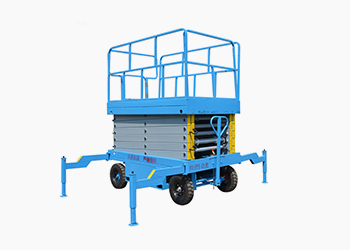
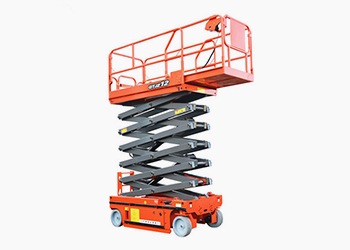
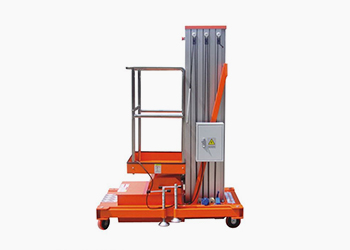
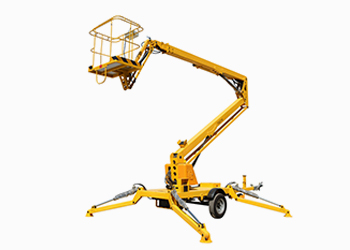
If you are asking whether you need a license to operate a scissor lift, the direct answer is: there is no federal or nationwide government licensing system for scissor lift operators in the United States. OSHA does not issue scissor lift licenses, and no national operator registry exists. What the law requires is that employers provide appropriate training, ensure workers can safely perform their assigned work, and maintain documentation showing that operators have been trained and evaluated.
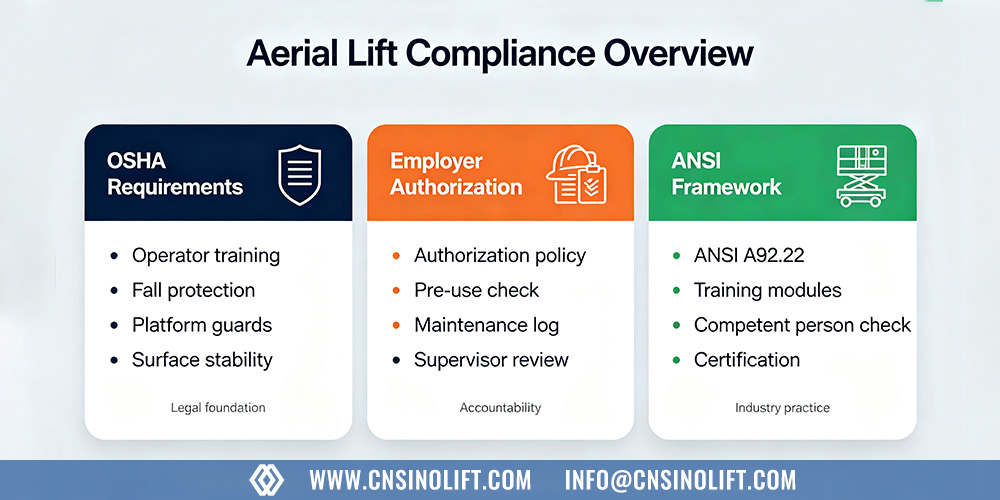
This article separates the three concepts that are often confused: OSHA training requirements, employer authorization and documentation, and ANSI industry training framework.
| Question | Answer |
|---|---|
| Do I need a government-issued scissor lift license? | No. There is no federal or nationwide government scissor lift operator license. |
| Does OSHA require training? | Yes. Employers must provide appropriate training and ensure workers can safely operate the equipment they are assigned to use. |
| Does OSHA issue an operator card? | No. OSHA does not issue scissor lift licenses or training cards. |
| Who documents authorization? | The employer maintains training and evaluation records and authorizes qualified employees to operate the equipment. |
| How long is training valid? | OSHA does not set a universal expiration date. ANSI-based programs commonly use a three-year refresher interval, with additional retraining when specific triggers occur. |
| Is a harness required on a scissor lift? | Not automatically when compliant guardrails provide the required fall protection. Equipment design, site conditions, manufacturer instructions, and employer policy can change the requirement. |
 Does OSHA Issue a Scissor Lift License?
No. OSHA sets training and workplace safety requirements, but it does not issue operator licenses, certification cards, or a national registry. OSHA has consistently treated scissor lifts as a form of mobile scaffold, not as aerial lifts. OSHA’s official eTool describes scissor lifts as “mobile supported scaffold work platforms used to safely move workers vertically and to different locations” and states that they are “different from aerial lifts because the lifting mechanism moves the work platform straight up and down using crossed beams functioning in a scissor-like fashion.”
That classification determines which OSHA standards apply.
For construction work, the relevant standards are:
29 CFR 1926.451 — General requirements for scaffolds
29 CFR 1926.452(w) — Additional requirements for mobile scaffolds
29 CFR 1926.454 — Training requirements
For general industry, the relevant standards are:
29 CFR 1910.27 — Scaffolds and rope descent systems
29 CFR 1910.28(b)(12) — Duty to have fall protection and falling object protection
29 CFR 1910.29(b) — Fall protection systems criteria and practices
This is why scissor lifts are regulated differently from boom lifts, which fall under the aerial lift standard 1926.453. For a broader look at how different lift types compare in terms of classification and safety requirements, the scissor lift procurement guide provides a systematic comparison of equipment categories and applications.
OSHA requires employers to provide appropriate training for employees who work from scissor lifts under 29 CFR 1926.454(a). The training must be delivered by a person qualified to recognize hazards associated with the type of scaffold being used and to understand the procedures needed to control or minimize those hazards.
Training must cover, at a minimum:
The correct procedures for operating the scissor lift vertically and while in transit
Electrical hazards, fall hazards, and falling object hazards in the work area
The correct procedures for dealing with those hazards
The proper use of the scissor lift and the proper handling of materials on the platform
The maximum intended load and the load-carrying capacities of the platform
OSHA also requires that only trained workers be allowed to use scissor lifts, and employers must ensure those workers demonstrate they can use the equipment properly.
The key point is this: OSHA requires employers to provide training and ensure worker competence. OSHA does not issue the documentation. The employer documents the required training and evaluation.
Under 1926.454(b), the employer must verify compliance by preparing a written certification record. That record must include the name of the employee trained, the date of training, and the signature of the person who performed the evaluation.
ANSI A92.24 is the industry consensus standard for training requirements for Mobile Elevating Work Platforms (MEWPs), which includes scissor lifts. It provides a more detailed framework for operator training, supervisor training, occupant training, familiarization, documentation, and record retention.
ANSI A92.24 does not create a government license. It is a standard that employers, contractors, insurers, and equipment owners may reference when building a training program or evaluating whether an operator is qualified.
Under ANSI A92.24, training is not limited to operators. Personnel who directly supervise MEWP operators must also be trained in proper MEWP selection, the rules and standards applying to MEWPs, potential hazards and protective measures, and the proper storage and use of the manufacturer’s operation manuals. The standard also requires machine-specific familiarization on the exact make and model an operator will use, plus a practical hands-on evaluation by a qualified person before the operator works alone.
OSHA provides the federal legal requirements. ANSI A92.24 provides a detailed industry framework. Meeting ANSI requirements may also be expected by employers, general contractors, insurers, or equipment owners.
OSHA does not establish a universal expiration date for scissor lift operator training. OSHA’s approach is event-driven. Retraining is required when an operator is observed performing unsafely, is involved in an accident or near-miss, receives an evaluation revealing a deficiency, is assigned a different type of equipment, or when workplace conditions change.
ANSI-based training programs commonly use a three-year interval for refresher training and evaluation. Many employers use a three-year refresher cycle as an industry practice, while also providing additional retraining when required.
To be precise: three years is an ANSI and industry practice, not a universal OSHA expiration rule.
Training also includes understanding pre-use inspection requirements. OSHA requires that scaffolds and scaffold components be inspected for visible defects by a competent person before each work shift, and after any occurrence that could affect a scaffold’s structural integrity.
A pre-use inspection should cover:
Operating and emergency controls
Safety devices
Air, hydraulic, and fuel system leaks
Cables and wiring harness
Loose or missing parts
Tires and wheels
Placards, warning labels, control markings, and operating manuals
Outriggers and stabilizers
The guardrail system
Any items specified by the manufacturer
ANSI standards and manufacturer requirements may also specify periodic inspection intervals beyond the pre-use check. The applicable inspection schedule should be based on the machine manufacturer’s instructions and the standards applicable to the equipment and worksite. For a detailed, step-by-step walkthrough of what to check on a self-propelled scissor lift before each shift, see the self-propelled scissor lift daily inspection checklist.
 Is a Harness Required on a Scissor Lift?
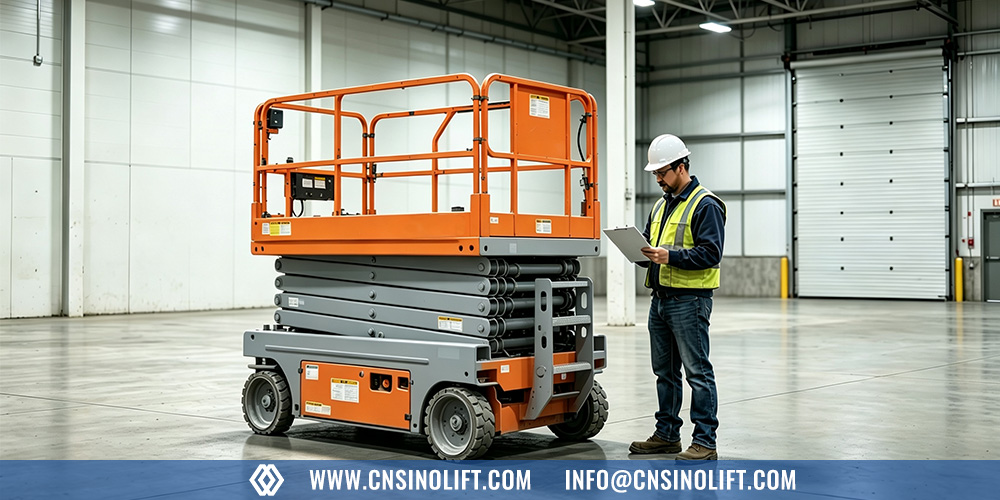
OSHA does not automatically require a personal fall arrest system on a scissor lift when a compliant guardrail system is in place. For scissor lifts with properly maintained guardrails, the guardrail system can serve as the primary fall protection under OSHA’s scaffold rules.
However, this does not mean harnesses are never required on scissor lifts. Additional fall protection may still be required depending on the equipment design, work conditions, manufacturer instructions, or employer policy. Some manufacturers state that personal fall protection is required for their scissor lift models, and those instructions should be followed. Employers who choose to require harnesses as a matter of company policy or client requirement are free to do so. For a closer look at when harnesses become mandatory and how to select the correct fall protection equipment, see the guide on whether you need to wear a safety harness in a scissor lift.
OSHA citations for training failures are not theoretical. Several representative cases illustrate the pattern.
In one enforcement action, an employer was cited because an employee performing work on a scissor lift had not been trained on equipment inspection before the work shift, exposing the employee to operational hazards, nor trained on the operation of the scissor lift itself, exposing the employee to positional hazards. The initial penalty of $11,350 escalated to $34,050 after a formal settlement.
In another case, an employer was cited under 1926.454(a)(3) because employees operating a scissor lift were not trained in the proper use of the scaffold, the recognition and avoidance of unsafe conditions, or the proper handling of materials on the scaffold. The employees had not been trained on topics including working only from the floor of the personnel platform, fall hazards, and ensuring a lift capable of reaching the necessary height was used. The initial penalty of $7,000 was settled to $4,200.
In a third case, an employer was cited under 1926.454(a)(3) because employees required to operate a scissor lift were not provided training on hazards, including how to work safely with or near scissor lifts. Employees became stranded in a scissor lift and were unaware of the location of the manufacturer’s instructions for operating the lift vertically or emergency procedures for lowering the unit.
These cases show that inadequate training can lead to serious OSHA violations, particularly when operators are not trained to recognize hazards, use the equipment correctly, or follow emergency procedures. Understanding the most common scissor lift accidents helps reinforce why comprehensive operator training is essential rather than optional.
While OSHA sets the federal baseline, some states impose additional requirements. California’s Title 8 Section 3648 establishes requirements for authorized operators, fall protection, load limits, control checks, and prohibits unauthorized modifications. Cal/OSHA does not issue a government scissor lift operator license. California employers must document that each operator was trained and evaluated on the equipment they will actually run.
For non-commercial use — a homeowner renting a lift for a personal project on their own property — OSHA’s workplace requirements generally do not apply because there is no employer-employee relationship. However, the equipment manufacturer’s instructions and any rental agreement terms still govern safe operation.
The chain of responsibility runs from employer to supervisor to operator:
Employer — provides training by a qualified person, evaluates operators, maintains written records, and ensures only trained and authorized personnel operate the equipment.
Supervisor — ensures operators are properly trained and familiarized with the machines they use, understands MEWP selection criteria, and identifies potential hazards and protective measures.
Operator — completes training, performs pre-use inspections, operates within load limits, and reports hazards or malfunctions. In many cases, a single trained operator can safely manage a self-propelled scissor lift without additional personnel. For a detailed look at solo operation requirements and best practices, see can you operate a scissor lift by yourself.
Scissor lifts differ in capacity, working height, platform size, and operating characteristics. Training on one model does not automatically qualify an operator for another. Operators must understand the specific machine they are authorized to use, including its load limits, platform configuration, and safety devices.
For example, SINO LIFT’s GTJZ series spans working heights from 7.8 m to 17.8 m, with safe working loads from 230 kg to 550 kg depending on the model. The extension deck has a separate, lower load rating than the main platform. Operators must be trained to recognize those differences before stepping onto the machine. To review the full specifications and configuration options of SINO LIFT’s self-propelled electric scissor lift range, visit the self-propelled electric scissor lift product page.
Do I need a license to operate a scissor lift at work?
No federal scissor lift operator license is required in the United States. However, employers must ensure that employees receive the training and evaluation required for the work they perform and maintain the appropriate documentation.
Does OSHA require a physical operator card?
OSHA requires employers to maintain documentation of required training and evaluation, but it does not require a specific operator card format. The written record must name the operator, show the date of training and evaluation, and include the evaluator’s signature.
Can I operate a scissor lift without training if I already drive a boom lift?
No. Scissor lifts and boom lifts are regulated differently and behave differently. Scissor lifts are scaffold-class machines; boom lifts are aerial lifts. Training is equipment-specific.
How long is scissor lift training valid?
OSHA does not set a fixed expiration date. ANSI A92.24 and industry practice commonly use a three-year refresher interval, with additional retraining whenever specific triggers occur.
Is a harness required on a scissor lift?
OSHA does not automatically require a personal fall arrest system when guardrails are intact and compliant. However, some manufacturers require harnesses, and employers may require them as a matter of policy.
Do supervisors need training even if they never operate a scissor lift?
Under ANSI A92.24, supervisors who directly supervise MEWP operators are expected to receive supervisor training, even if they do not operate the equipment themselves. This training covers equipment selection, regulations, hazard identification, and manual storage.
What happens if an employer allows an untrained operator?
OSHA can cite the employer for training violations, and penalties can be significant depending on the circumstances. The employer carries the liability because OSHA places the compliance obligation on the employer, not the operator or the training provider.
HENAN SINO LIFT manufactures scissor lifts, mast lifts, boom lifts, cargo lifts, loading ramps, wheelchair lifts, and warehouse handling equipment. We provide equipment solutions for construction, facility maintenance, warehousing, and industrial applications.
If you need help selecting a scissor lift for your job — or if you have questions about the training and documentation requirements that apply to your operation — contact us to discuss your requirements.
Email: info@cnsinolift.com
Website: www.cnsinolift.com