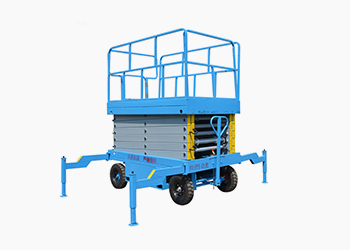
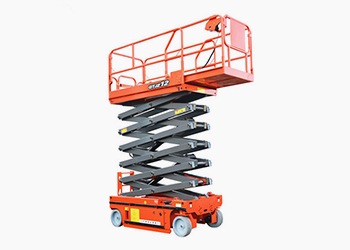
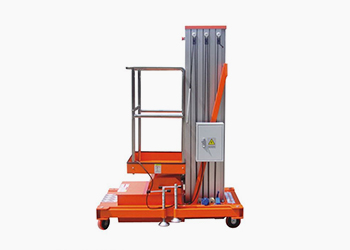
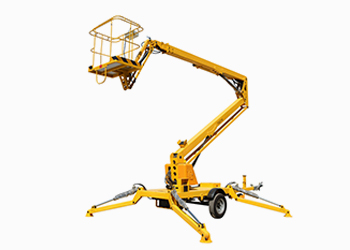
Warehouse maintenance is the backbone of smooth logistics operations. From rack inspection and ceiling light replacement to HVAC upkeep, shelf cleaning, and equipment repair, daily warehouse tasks require safe, stable, and flexible vertical access equipment. Among all aerial work platforms, scissor lifts remain the most popular choice for warehouse maintenance thanks to their stable flat platform, zero emissions, low noise, and compact footprint.
However, many warehouse managers make costly mistakes: choosing an oversized model that jams narrow aisles, picking under-capacity lifts that risk safety, or selecting outdoor-grade machines unsuitable for indoor floors. This guide walks you through a practical, step‑by‑step framework to help you choose a scissor lift that fits your site, budget, and long-term operational needs.
Instead of browsing through endless spec sheets, follow this structured approach. Each step answers a specific purchasing question, so you can move from general requirements to a shortlist of suitable models.
Before looking at any specifications, start by mapping your actual working environment. This is the foundation of every other decision.
Most standard warehouse maintenance tasks are indoor-only. For enclosed warehouses with smooth epoxy or concrete floors, self-propelled electric scissor lifts are generally the preferred choice. They produce no exhaust emissions during operation, run quietly to avoid disrupting warehouse workflows, and feature non-marking tires to protect floor coatings.
For warehouses with semi-outdoor loading docks or covered yard maintenance areas, consider electric models with appropriate weather protection (e.g., IP54) to withstand mild wind, dust, and occasional moisture. Avoid heavy diesel rough-terrain scissor lifts for pure indoor use—they are bulky, noisy, and leave floor marks.
Narrow aisles are the biggest space constraint in modern high-density warehouses. Before selecting a lift, measure your narrowest operational aisle and standard warehouse doorway width. A scissor lift that cannot turn in your aisle is a costly mistake.
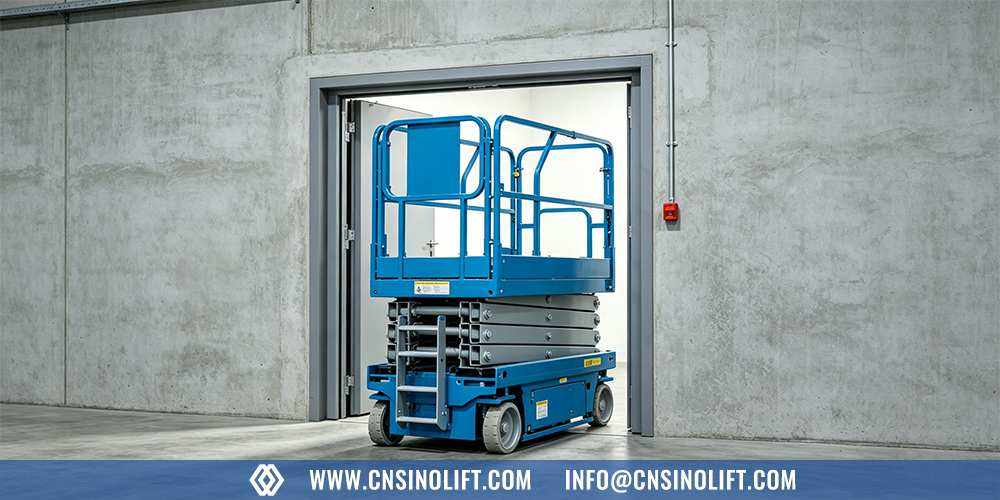
Key dimensions to verify:
Electric scissor lifts require firm, level surfaces — typically concrete, asphalt, or compacted industrial flooring. They are not rated for gravel, mud, or uneven terrain. For smooth warehouse floors, non-marking tires are generally recommended to reduce scuff marks and protect floor coatings.
Measure overhead obstructions — sprinkler pipes, light fixtures, crane runways, and mezzanine beams. The machine's stowed height (with guardrails folded) must clear these when moving through the facility, and the raised platform must have sufficient clearance for the task.
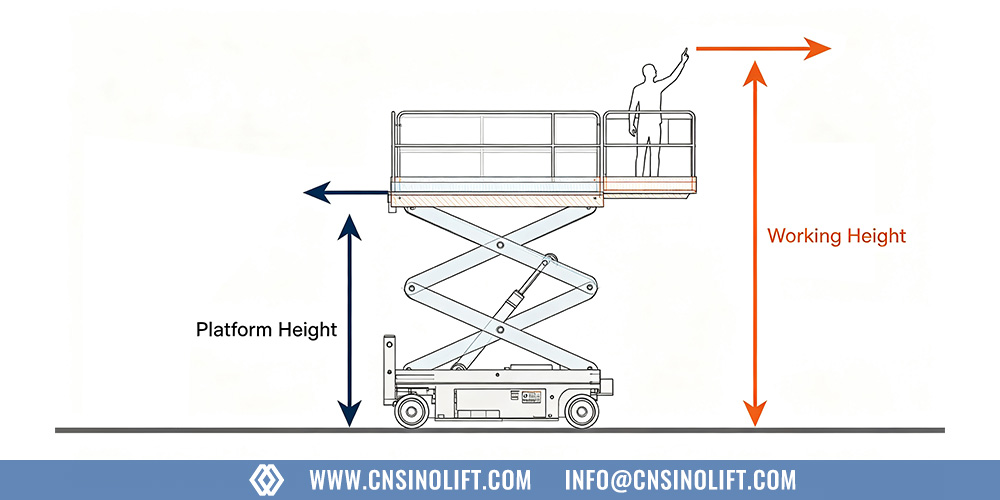
Working height is one of the most frequently misunderstood specifications. Many buyers confuse platform height with working height, leading to insufficient reach for daily maintenance jobs.
Platform height is the maximum height the platform can be raised to.
Working height is higher because it accounts for the operator's practical reach. When selecting a lift, compare the manufacturer's stated working height with the actual height of the task rather than choosing a model based only on platform height.
A typical guide for warehouse maintenance tasks:
| Typical Task | Recommended Working Height |
|---|---|
| Lighting replacement, low‑level rack inspection | 6 – 8 m |
| Rack maintenance, HVAC servicing, standard multi‑level racking | 8 – 12 m |
| High‑bay facility maintenance, ceiling infrastructure | 12 m+ |
Critical check: Always measure your highest maintenance point and add a practical margin for the operator's reach and working posture. The actual reach may be affected by operator height, working posture, task position, platform configuration, guardrails, and overhead obstructions.
Platform capacity determines how many workers, tools, and materials the lift can safely support at maximum height. Overloading is one of the top causes of scissor lift safety accidents in warehouses.
These ranges are for initial selection only; actual platform capacities vary by model and manufacturer.
Consider these capacity ranges as a starting point:
Platform size also matters:
Select a platform capacity that exceeds the combined weight of all occupants, tools, materials, and equipment that will be carried on the platform, while remaining within the manufacturer's rated capacity. Avoid selecting a model that operates at its rated capacity during normal tasks — leave a practical margin for real‑world conditions.
With your environment and height requirements clear, now check whether the lift can actually navigate your workspace.
Key specifications to verify:
Pro tip: Map the tightest point on the route from entry to the work location — not just the open floor area. Measure under mezzanine beams, through internal doorways, and beneath sprinkler headers. Standard electric scissor lifts work for wide aisles, while ultra‑narrow scissor lifts are designed for compact warehouse layouts, with a tight turning radius to navigate compact warehouse layouts with less risk of contacting storage racks.
For indoor warehouse maintenance, the power source directly impacts air quality, noise levels, and operational safety.
Electric scissor lifts run on rechargeable battery packs and are the default choice for indoor warehouse environments.
Modern electric models typically support a full working shift on a single charge, and most charge overnight. Battery life and charging time depend on the specific model, battery type, and usage pattern.
Diesel models are built for outdoor construction sites and uneven ground. They emit exhaust fumes and operate at higher noise levels, making them unsuitable for most indoor warehouse applications. They are only worth considering if your maintenance covers large uneven outdoor warehouse yards.
Verdict: For most indoor warehouse maintenance applications, electric scissor lifts are generally the preferred choice.
Warehouse floors (especially second‑floor storage areas and mezzanines) have strict load‑bearing limits. Before purchasing, you need to consider more than just the machine's total weight.
A mezzanine's allowable load in kg/m² does not automatically mean a mobile elevating work platform is safe to operate on it. Wheel loads, load distribution, and the manufacturer's maximum ground pressure also need to be considered.
Uniform load is the overall weight distributed across the floor area.
Point load / wheel load is the concentrated pressure at each wheel contact point.
A machine that appears acceptable based on total weight may still create excessive concentrated loads at individual wheels, potentially causing floor cracking or indentation.
For elevated warehouse areas, mezzanines, and floors with load restrictions, check the scissor lift's maximum ground pressure or wheel load in addition to the total machine weight. This is a critical parameter that is often overlooked.
Calculation: Total equipment load = Machine weight + Operators + Tools/materials. However, structural suitability also depends on wheel loads, load distribution, and the manufacturer's maximum ground pressure. When in doubt, consult a structural engineer.
Standard electric scissor lifts with distributed wheel pressure work perfectly on flat, smooth warehouse concrete and epoxy floors. Avoid rough‑terrain models with heavy wheel pressure for indoor mezzanine use.
Warehouse maintenance involves working at height near racking, machinery, and active operations. Safety features are non‑negotiable.
Daily pre‑use inspections are critical. A proper walkaround should check for:
Don't evaluate scissor lifts on purchase price alone. Consider the total cost over the machine's lifespan.
| Cost Factor | Electric Scissor Lift | Diesel / Rough‑Terrain |
|---|---|---|
| Initial purchase price | Lower to moderate | Higher |
| Daily operating cost | Lower (battery charging) | Higher (fuel, maintenance) |
| Maintenance frequency | Minimal | Regular (engine, hydraulics) |
| Battery replacement | Periodic (depends on usage) | N/A |
| Noise / emission compliance | No additional cost | May require ventilation upgrades |
One‑off or occasional jobs – Renting is often smarter. You avoid maintenance costs and storage requirements.
Regular, ongoing use – Buying saves money in the long run. You have equipment available when needed and can build operator familiarity.
For warehouses with consistent maintenance schedules, purchasing a well‑matched electric model typically provides the best long‑term value.
When you are ready to request a quote or compare models, prepare the following information. This helps suppliers understand your needs and recommend the right configuration.
| Specification | Your Requirement |
|---|---|
| Required working height | |
| Platform height | |
| Platform capacity (kg) | |
| Number of operators | |
| Platform dimensions (L × W) | |
| Overall width (stowed) | |
| Stowed height | |
| Turning radius | |
| Indoor / outdoor use | |
| Floor type (concrete, epoxy, mezzanine) | |
| Maximum ground pressure / wheel load | |
| Battery type & charging voltage | |
| Non‑marking tires required? | |
| Gradeability (if ramps are used) | |
| Extension deck needed? | |
| Safety configuration (overload, tilt, etc.) | |
| Local compliance requirements | |
| Quantity required | |
| Delivery location / country |
If you are unsure which configuration fits your warehouse, provide these specifications to a reputable supplier for a model recommendation.
| Warehouse Scenario | Recommended Lift Type |
|---|---|
| Narrow aisle indoor warehouse | Ultra‑narrow self‑propelled electric scissor lift |
| Standard indoor warehouse daily maintenance | Compact electric scissor lift (6 – 12 m working height) |
| High‑bay large warehouse | High‑reach electric scissor lift with extension deck |
| Semi‑outdoor warehouse yard | Electric model with appropriate weather protection (e.g., IP54) |