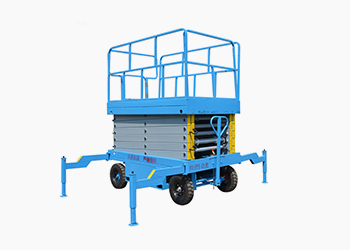
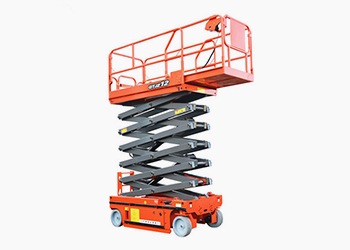
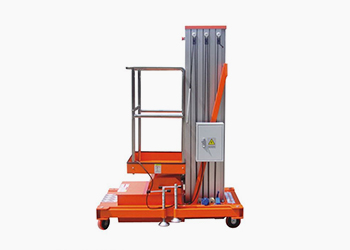
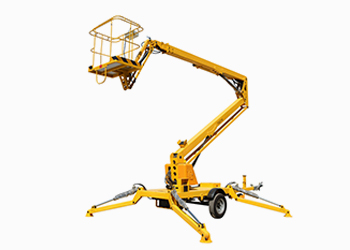
Selecting the right scissor lift isn't just about finding the tallest or cheapest machine on the lot. It's about matching engineering specifications to the realities of your job site—working height, platform load, ground conditions, site access, and power source. A mismatched lift leads to project delays, damaged floors, safety hazards, and unnecessary costs.
This guide walks you through a 6-step selection framework designed to help you make a confident, informed purchasing decision. By the end, you'll know exactly which specifications to look for—and which questions to ask your supplier.
Use this framework in order. Skipping a step often leads to costly mistakes.
Start by measuring the height of the work surface you need to reach—not the platform floor.
Working height is commonly estimated as platform height plus approximately 6 ft (1.8 m) of operator reach for preliminary planning. However, this is a general industry rule of thumb rather than a universal formula—definitions can vary between manufacturers. Some brands measure working height to the maximum allowable reach, while others may account for different average operator heights.
Do not select a lift based only on the maximum height listed in a product catalog. Make sure the rated working height matches the actual elevation required at your job site. Always consult the specific machine's data plate or official specification sheet for the exact stated working height before making a final selection. Learn more about height considerations in our detailed guide: How High Can a Scissor Lift Go?
When in doubt, consult with your equipment supplier to confirm the practical clearance required for your specific job site.
The ranges below are examples only. Always select the lift based on the actual working height required at your site.
| Example Application | Common Working Height Range | Typical Lift Type |
|---|---|---|
| Warehouse inventory, ceiling maintenance | 16 – 26 ft | Compact electric |
| Commercial maintenance, retail | 26 – 38 ft | Standard electric |
| Exterior construction, bridge maintenance | 40 – 60 ft | Rough-terrain |
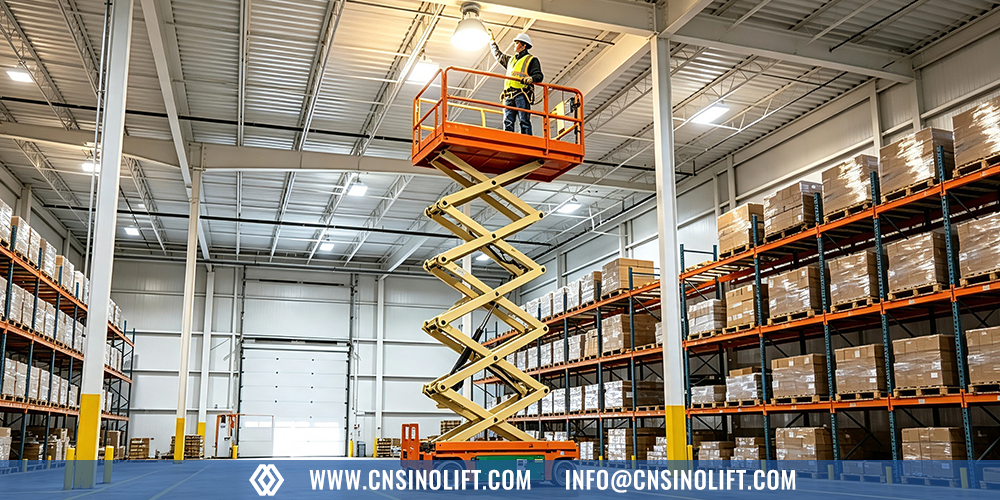
Your total platform load must include the combined weight of all personnel, tools, materials, and any attached accessories. This gross weight must remain strictly within the manufacturer's rated platform capacity (Safe Working Load, SWL) as stated on the machine's data plate.
The rated platform capacity is an absolute, non-negotiable engineering limit—not a guideline to be adjusted with arbitrary percentage markups. It accounts for structural integrity, hydraulic pressure limits, and stability margins at full height.
Basic Platform Load Calculation:
Total Platform Load = Personnel + Tools + Materials + Accessories
For example, two workers weighing 80 kg each, 40 kg of tools, and 100 kg of materials create a total platform load of 300 kg. The selected lift must have a rated platform capacity that meets or exceeds the manufacturer's requirements for this load and configuration. For more specific guidance, read Electric Scissor Lift Capacity vs. Operator Weight.
Critical note: A platform extension may affect the allowable platform capacity or load distribution, depending on the machine design. Always refer to the manufacturer's load chart for extended-platform operation. Carrying oversized materials that shift the center of gravity can also reduce effective capacity.
| Lift Category | Typical Reference Range | Best For |
|---|---|---|
| Compact electric | 500 – 700 lbs (227 – 318 kg) | Single operator + hand tools |
| Standard electric | 1,000 – 1,500 lbs (454 – 680 kg) | 2 workers + equipment |
| Rough terrain diesel | 1,500 – 2,500+ lbs (680 – 1,134+ kg) | Crew + heavy materials |
Actual capacity varies by model and configuration. Always use the manufacturer's rated capacity for final selection.
Height and load capacity aren't the only factors—platform dimensions determine whether your crew can actually work efficiently once elevated. Common questions buyers ask at this stage:
Platform Width & Depth: Narrow platforms (typically around 32 inches) fit through tight warehouse aisles but provide limited workspace. Wider platforms (over 40 inches) offer more room for operators and materials.
Extendable Decks: Many scissor lifts feature manual or powered platform extensions that slide outward to increase working area. A platform extension may affect the allowable platform capacity or load distribution, depending on the machine design. Always refer to the manufacturer's load chart for extended-platform operation.
| Platform Type | Typical Width | Typical Use | Best For |
|---|---|---|---|
| Compact / Narrow | 32 – 36 in (81 – 91 cm) | 1 operator | Tight aisles and doorways |
| Standard | 40 – 48 in (102 – 122 cm) | 1–2 operators | General maintenance |
| Wide / Extension | 48+ in (122+ cm) | Multiple operators + materials | Installation and construction |
Pro Tip: If you frequently carry long materials like pipe, conduit, or lumber, a model with a platform extension can significantly reduce repositioning time. Just remember to check the load chart for any capacity changes when the extension is deployed.
The surface where the lift will operate is a primary driver of the model you need.
| Ground Condition | Recommended Tire Type | Recommended Model |
|---|---|---|
| Smooth concrete/asphalt (indoor) | Non-marking solid/cushion tires | Electric slab lift |
| Smooth outdoor pavement | Pneumatic or foam-filled tires | Electric or diesel |
| Gravel, dirt, grass | Deep-tread pneumatic, 4WD | Rough terrain diesel |
| Sensitive flooring (museums, gyms, data centers) | Polyurethane non-marking tires | Electric with floor-protection package |
| Sloped surfaces | Check slope specs below | Rough-terrain scissor lift (with outriggers) |
Important slope distinction:
Gradeability and allowable operating slope should never be treated as the same specification. A machine may be capable of driving up a certain grade while still being prohibited from elevating its platform on that slope.
For rough-terrain models, check the manufacturer's specified gradeability and maximum allowable slope for both driving and elevated operation. Never assume the machine can operate on a slope simply because it can drive up it. Some rough-terrain models have significant gradeability when fully lowered, but the allowable slope for elevated operation is much more restrictive. Always use the manufacturer's specified limits for both travel and elevated operation.
Critical takeaway: Never assume a machine can work at height on a slope just because it can drive up that slope. Always consult the manufacturer's load chart and slope specifications for both travel and elevated modes. If the job site exceeds the machine's rated operating slope, do not elevate the platform unless the machine can be safely leveled using the manufacturer's approved leveling system or operating procedure.
Explore related resources for specific working conditions:
This step is often overlooked—and it's one of the most common reasons lifts get returned or projects delayed. A lift that fits the job but not the job site is a wasted investment.
Check These Dimensions Before Ordering:
Checklist for Site Access:
Pro Tip: Walk the entire path the machine will take—from delivery drop-off to the work area—before committing to a model. Check every doorway, corner, and ramp. If possible, mark out the machine's dimensions on the floor to visualize clearance.
| Access Constraint | What to Look For |
|---|---|
| Narrow doorways | Compact chassis, fold-down guardrails |
| Tight warehouse aisles | Narrow platform width, tight turning radius |
| Elevator transport | Check elevator weight limit and dimensions |
| Sensitive floors | Non-marking tires; lightweight model |
Your power source selection determines where the lift can operate, how long it runs, and its maintenance requirements.
| Application | Recommended Power / Drive |
|---|---|
| Indoor warehouse | Electric |
| Indoor manufacturing plant | Electric |
| Shopping mall / commercial building | Electric |
| Outdoor paved surface | Electric or diesel |
| Construction site | Diesel rough terrain |
| Gravel / dirt / grass | Rough-terrain |
| Frequent repositioning | Self-propelled |
| Occasional short-distance positioning | Push-around |
Important: Internal-combustion models are generally unsuitable for enclosed indoor environments because of exhaust emissions and ventilation requirements. Always check local regulations and site-specific requirements before deploying diesel-powered equipment indoors.
| Type | Drive Type | Best For |
|---|---|---|
| Self-Propelled | On-board drive motors; operator controls movement from platform | Large work areas, frequent repositioning |
| Push-Around | Manually pushed into position; no drive system | Small indoor jobs, occasional use, budget-conscious |
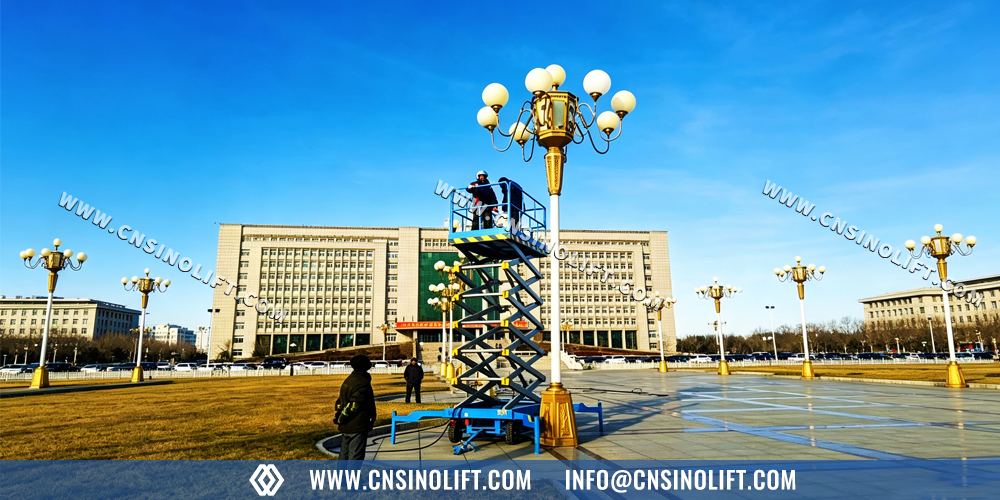
For further reading on power and mobility options, check these articles:
Note on "Hydraulic": Most mobile scissor lifts use hydraulic lifting systems. When comparing mobile scissor lifts, focus on the machine's platform height, rated capacity, drive system, terrain capability, and safety features rather than treating "hydraulic" as a separate mobile lift category.
After completing the 6-step assessment, here's a quick reference to match your application with a recommended lift type:
| Your Application | Recommended Scissor Lift |
|---|---|
| Indoor warehouse maintenance | Electric scissor lift |
| Retail / commercial building maintenance | Compact electric scissor lift |
| Manufacturing plant | Electric scissor lift |
| Outdoor paved surface | Electric or diesel scissor lift |
| Gravel / dirt / uneven terrain | Rough-terrain scissor lift |
| Heavy materials + multiple workers | High-capacity scissor lift |
| Tight indoor spaces | Compact scissor lift or vertical mast lift |
For a complete purchasing overview, you may also find our Scissor Lift Purchasing Guide: Price, Types, Applications & Comparison helpful.
Scissor lifts and vertical mast lifts are designed for different access requirements. Choosing between them depends mainly on working height, platform capacity, available workspace, and site access.
Vertical mast lifts use lightweight vertical columns (sometimes built with aluminum alloy mast structures for reduced weight) instead of a crossed-scissor mechanism. They are typically pushed or towed into position manually.
Typical Reference Specifications:
Specifications vary significantly by model and manufacturer.
| Feature | Scissor Lift | Vertical Mast Lift |
|---|---|---|
| Load Capacity | 500 – 2,500+ lbs | 200 – 400 lbs (single person) |
| Platform Stability | Excellent (wide base) | Good (narrower base) |
| Indoor Maneuverability | Moderate | Excellent (fits elevators/vans) |
| Outdoor Use | Yes (rough terrain models) | Limited (smooth surfaces only) |
| Transport | Heavy (requires trailer) | Lightweight (fits van/elevator) |
| Best Application | Multi-person, heavy tools/materials | Single operator, light maintenance, tight spaces |
Facility Manager Insight: Many operations keep both. Vertical mast lifts handle quick, light indoor repairs, while scissor lifts take over for heavy installations and outdoor work. Evaluating your typical crew size + load weight is the fastest way to decide.
Safety and compliance should be part of the selection process—not something checked after the machine has been purchased. Before operating any aerial work platform, verify that the equipment and operator training meet the applicable standards for your region.
Important: The applicable standard depends on the country, machine type, and intended application. Confirm the required certification and compliance documents with the supplier before purchase. As a China-based manufacturer exporting globally, we manufacture equipment to meet the relevant standards of your destination market—always verify local requirements with your importer or regulatory authority.
Regardless of region, ensure the following are present on any scissor lift:
Choose rental when the equipment is needed for a short-term or occasional project. Buying is generally more suitable when the lift will be used regularly across ongoing maintenance, warehouse, manufacturing, or construction operations.
When purchasing, also consider maintenance, spare parts availability, warranty support, and long-term operating cost.
Equipment selection should not stop at technical specifications. Before purchasing, check the availability of spare parts, maintenance support, warranty terms, service documentation, and technical assistance.
Before choosing a scissor lift, confirm:
Q: What factors should I consider when choosing a scissor lift?
A: The main factors are working height, platform capacity, platform size, ground conditions, site access, power source, drive type, and applicable safety and compliance requirements. Your expected workload and operating frequency should also be considered when comparing models. Use the 6-step framework above to assess your specific needs.
Q: What information should I give a scissor lift supplier?
A: Provide the required working height, total platform load, platform dimensions, indoor or outdoor application, ground conditions, power preference, site access limitations, and expected usage frequency. This allows the supplier to recommend a suitable configuration instead of quoting a generic model.
Q: What size scissor lift do I need?
A: "Size" refers to three dimensions: working height, platform load capacity, and platform footprint. Use the 6-step framework above to determine your requirements: measure your working height, calculate total load (personnel + tools + materials), and assess site access constraints. Your supplier can then match these specifications to the appropriate model.
Q: How do I calculate the required scissor lift capacity?
A: Total Platform Load = Personnel + Tools + Materials + Accessories. Add the weight of all personnel who will be on the platform simultaneously, plus the weight of all tools, materials, and accessories. This total must be below the machine's rated platform capacity (Safe Working Load, SWL) printed on the data plate. Platform extensions and uneven ground can reduce effective capacity—always consult the specific load chart for your configuration.
Q: What working height do I need?
A: Measure the actual elevation of the work surface (not the platform floor). Working height is commonly estimated as platform height plus approximately 6 ft (1.8 m) of operator reach—but this is a rule of thumb, not a universal formula. Manufacturer definitions vary, so always check the stated working height on the machine's specification sheet.
Q: Can a scissor lift be used outdoors?
A: Yes—but the model type depends on the surface. Electric scissor lifts are designed for smooth, level surfaces and may be used outdoors on paved areas. For rough terrain—gravel, dirt, grass, or slopes—a rough terrain diesel model with 4WD and pneumatic tires is required. Never use a standard electric slab lift on uneven outdoor ground.
Q: What is the difference between an electric and a rough-terrain scissor lift?
A: Electric scissor lifts are battery-powered, zero-emission, low-noise, and designed for smooth indoor surfaces. Rough-terrain lifts are diesel-powered (or sometimes hybrid), feature 4WD and large pneumatic tires, and are built for outdoor construction sites with uneven or unpaved ground. Battery runtime varies by model, capacity, load, and operating conditions; diesel models run continuously with refueling.
Q: Should I choose a scissor lift or a vertical mast lift?
A: Choose a scissor lift if you need to lift multiple workers, carry heavy materials, or work outdoors. Choose a vertical mast lift if you work alone with light hand tools, need to fit through standard doorways or into elevators, and operate indoors on smooth floors. Many facilities keep both for different job types.
Need Help Choosing the Right Scissor Lift?
Not sure which working height, platform capacity, or configuration you need? Send us your application requirements and our engineering team can recommend a suitable scissor lift configuration.
To receive a recommended configuration, please provide:
Manufacturer Note
The specifications and ranges mentioned in this guide are general reference values and may vary by model, configuration, manufacturer, and operating conditions. Always refer to the manufacturer's official specifications for final equipment selection.
This guide is prepared by the engineering and product team at Henan Sino Lift. We are committed to providing customers with high-quality, high-performance industrial equipment. Through years of technological innovation and strict quality control, we have earned the trust and support of customers worldwide.
We manufacture Scissor Lifts, Mast Lifts, Boom Lifts, Cargo Lifts, Loading Ramps, Wheelchair Lifts, and Warehouse Handling Equipment. If you need any of these products, please let us know — our team will specify a suitable solution for your application.