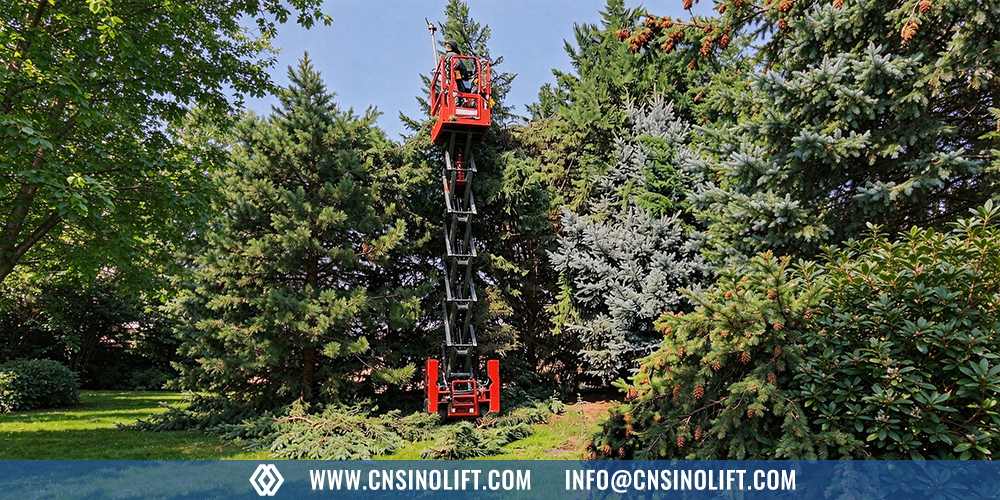
A scissor lift may be suitable for certain tree-trimming tasks, but only when the work method and site conditions make it safe to use. It is not a default choice for arborist work, especially when falling branches could strike the platform or supporting structure. The difference between a safe job and an incident usually comes down to whether the site and the cut plan actually match what a scissor lift is built to do.
This guide sets out those conditions, the risks that make scissor lifts a poor default choice for tree work, and the equipment specifications that matter when a scissor lift is the right tool.
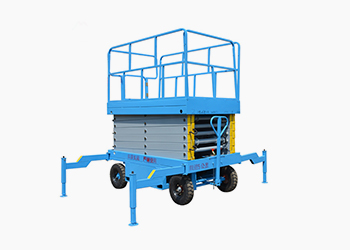
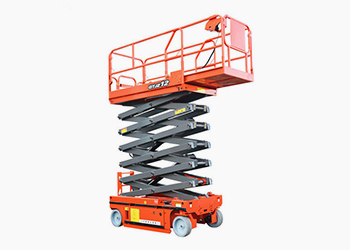
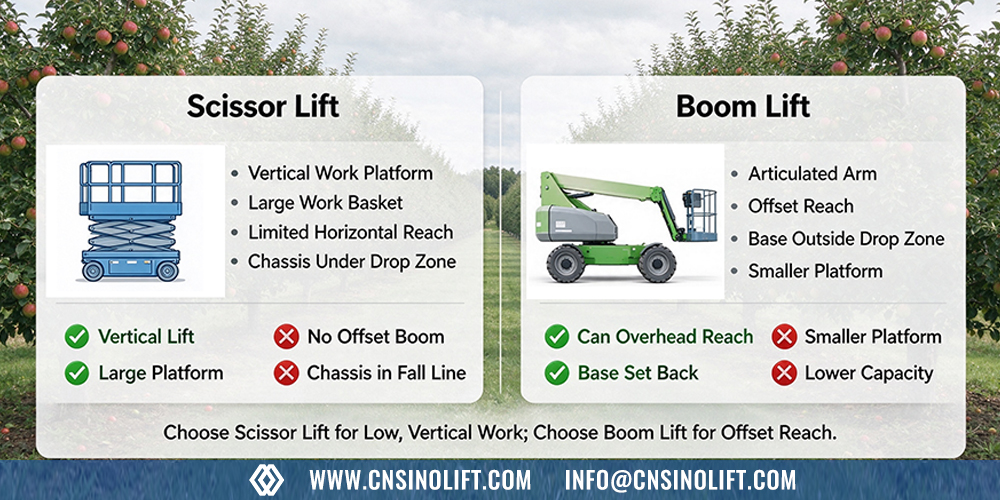
A scissor lift raises its platform straight up through crossed hydraulic arms. The platform stays directly above the chassis at all times. That vertical-only movement is efficient for indoor maintenance, warehouse work, and flat-ground installation jobs, but it creates a specific problem under a tree canopy: the scissor stack and the chassis sit directly in the path of anything that falls.
Safety guidance from several regulators reflects this. WorkSafe Queensland's guidance on elevating work platforms states that scissor lifts should not be used for tree trimming or removal unless the risk of falling branches striking the machine can be eliminated, because the support structure sits directly below the platform. That is a stricter position than "use caution." It means the burden is on the operator to show that the falling-branch risk is addressed before the lift goes up.
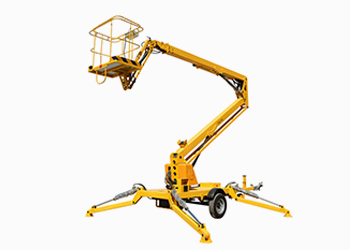
A boom lift avoids this by separating the basket from the base with an extended arm. The machine can sit back from the drop zone while the basket reaches into the canopy. That geometry is why arborists and tree crews tend to reach for articulating or telescopic booms when the work involves mature trees.
None of this makes a scissor lift unsafe in general. It makes it conditionally suitable for tree work, and the conditions need to be checked before the machine is dispatched.
A scissor lift is a reasonable choice when several conditions line up at once.
The branches are directly overhead. If the cut can be made while standing square under the limb, without leaning over the guardrail or reaching sideways around the trunk, the vertical-only movement of a scissor lift is not a limitation. Orchard rows, formal landscape trees with upright structure, and lower canopy clearance work fit this pattern.
Being directly below a branch does not automatically make the job suitable for a scissor lift. The risk of falling timber striking the machine must be assessed and eliminated before work begins. If the cut section can land on the platform, the guardrail, or the scissor stack, the setup needs to change or the job needs a different machine.
The ground is firm and level. Scissor lifts carry a high center of gravity when extended. Soft soil after rain, fresh fill, root-heave, or a noticeable slope all raise the tipping risk. Rough-terrain models with four-wheel drive and leveling outriggers extend the range of acceptable ground, but they do not make a slope safe. The manufacturer's slope limit still applies.
The cuts are small to medium. Deadwood removal, light structural pruning, canopy raising, and shaping are within reach. Cutting heavy limbs that could land on the platform or the scissor arms is not. A limb that strikes the guardrail or the scissor stack can damage the machine or eject the operator.
The work is pruning, not removal. Full tree removal generates large falling sections and unpredictable movement. That belongs with a boom lift or a qualified climbing crew, not a scissor platform.
Wind and power lines are under control. Outdoor operation depends on the model's rated wind speed and environmental limits. Check the manufacturer's manual before use, and stop work whenever wind or weather conditions exceed the permitted limits. Overhead utilities need to be identified and either de-energized, shielded, or kept well outside the minimum approach distance before any lift is positioned.
Within those limits, the scissor lift has real advantages for tree work. The platform is large enough for two or three workers plus pole saws, hand pruners, and a collection bin, which reduces the number of trips up and down compared with a narrow boom basket. Electric models produce no exhaust at the point of use, which matters for work inside gated communities, near public buildings, or in noise-sensitive parks. And the rental or purchase cost is generally lower than a boom lift of comparable height.
The limitations are just as specific as the use cases.
No horizontal reach. If the trunk sits offset from the platform, or the target limb grows sideways rather than up, the whole machine has to be repositioned. On a tree with a spreading canopy, that can mean several setups for one job. Leaning over the guardrail instead of repositioning is exactly where fall incidents start.
Height limitations. Standard scissor lifts are available in different working-height ranges, but their vertical-only movement limits access to branches that extend sideways or beyond the platform. For taller trees or branches that cannot be reached safely from directly below, consider a boom lift or a qualified tree-care crew.
Ground sensitivity. Slab electric scissor lifts are built for concrete. Using one on grass, mud, or gravel is a mismatch. Rough-terrain and tracked models address this, but the site still needs an assessment before the machine arrives.
Power-line proximity. Positioning the entire chassis close to a tree also positions it close to whatever runs through or past that tree. A boom lift lets the base stay farther back while the basket reaches in. For work near energized lines, that difference matters.
Frequent moves between trees. Scissor lifts are slow to reposition across a property. A towable boom lift or a bucket truck is more efficient when the job is a series of trees rather than one.
Storm damage or whole-tree removal. Storm-damaged limbs can be unstable, and large sections involve unpredictable loads. These jobs generally need a different work method and specialist equipment.
| Factor | Scissor Lift | Boom Lift |
|---|---|---|
| Platform movement | Vertical only | Vertical plus horizontal articulation |
| Working platform | Generally larger | Generally smaller basket |
| Access around a tree | Requires machine repositioning | Can reach up and across the canopy |
| Falling-branch exposure | Chassis directly below platform | Base can stay farther from the cutting area |
| Ground requirement | Flat and firm preferred | Rough-terrain and outrigger options |
| Power-line work | Not suitable | Insulated units with certified crew only |
| Rental cost | Often lower | Often higher |
| Typical tree-work role | Orchard rows, low canopy, light pruning | Mature trees, offset limbs, removal, utilities |
A simple rule of thumb: if the operator can stand directly under the branch and cut it without leaning, a scissor lift can work. If the job requires reaching around the trunk or working above an obstacle, a boom lift is the safer and more productive choice.
Neither machine automatically makes tree work safe. The work method, operator training, equipment limits, and site assessment remain essential.
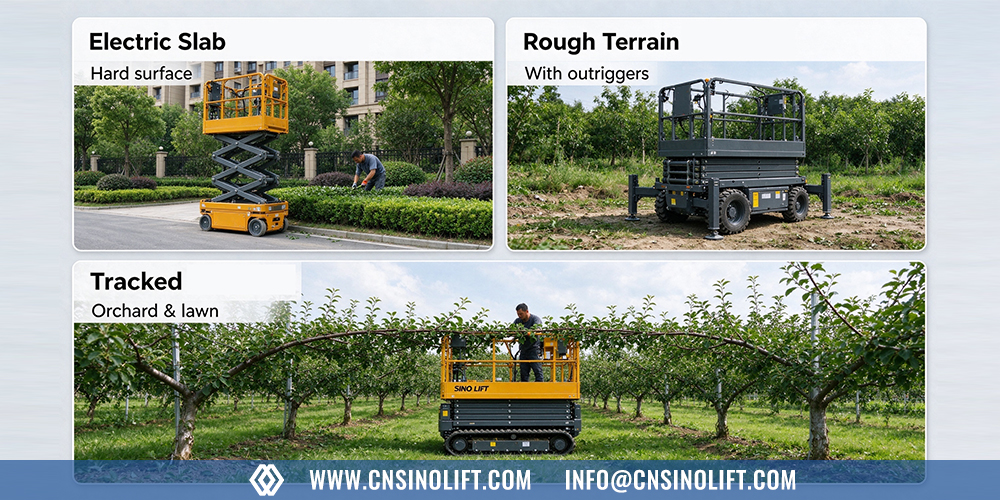
Equipment selection for tree work starts with the ground and the canopy, not the catalog. Three categories cover most landscaping and orchard scenarios. In SINO LIFT's current range, the specifications below show how working height, platform capacity, and ground interface vary across those categories.
For unpaved ground with moderate unevenness, a rough-terrain scissor lift with four-wheel drive and leveling outriggers is the baseline. Working heights in this class run from roughly 9.8 m to 22 m, with platform capacities around 400–500 kg. Models such as the GTJZ8RE and GTJZ10RE offer 9.8 m and 12 m working heights with 400 kg platforms, while the GTJZ20RE reaches 22 m with a 500 kg capacity and a 4 m platform that provides additional working space for personnel and tools, subject to the rated platform capacity and maximum permitted number of occupants. The leveling outriggers are what allow the machine to set up on ground that is not perfectly flat, within the manufacturer's rated angle.
For orchards, soft turf, and sites where wheeled machines would sink or mark the ground, a tracked undercarriage is worth considering. Non-marking rubber tracks spread the machine's weight and reduce ground pressure. Tracked electric models such as the GTJZ06TE and GTJZ08TE reach 8.3 m and 10.3 m working heights with 230 kg and 300 kg capacities respectively, which fits row-by-row pruning and low canopy work without damaging the ground between trees. Tracks do not eliminate the risk of sinking or tipping on unsuitable ground, so the same site assessment applies. These and other tracked scissor lift options are worth reviewing against the actual terrain before selection.
For paved surfaces, driveways, and indoor or covered landscape areas, a standard electric scissor lift is the efficient choice. Platform sizes in the 2.29 m × 0.81 m to 2.29 m × 1.13 m range hold two workers and tools comfortably, and the zero-emission drive suits residential and municipal sites. Outdoor use still depends on the model's environmental rating, wind limit, and ground conditions.
The common thread across all three categories is that the machine's rated slope, ground clearance, and platform capacity need to be checked against the actual site before the rental or purchase decision is made. Working height alone should never determine which lift is chosen. Where the canopy or terrain falls outside a scissor lift's limits, a boom lift is the appropriate category to evaluate.
For projects in the United States, OSHA requirements and applicable ANSI standards should be considered alongside the manufacturer's instructions and a job-specific risk assessment. Scissor lifts are not treated identically to boom-type aerial lifts under every OSHA provision, and the applicable rules vary by jurisdiction and application.
The points that matter most for tree work are these:
Only trained and authorized operators run the lift. Training should be specific to the model, not just general aerial lift awareness.
A pre-use inspection covers guardrails, hydraulic lines, tires or tracks, outriggers, emergency stop, and the emergency lowering system.
Platform load capacity includes workers, tools, and cut branches. It is easy to exceed on a pruning job once the collection bin starts filling.
Fall protection is used according to the manufacturer's manual and the site risk assessment. On scissor lifts, compliant guardrails can satisfy the applicable fall-protection requirements for the equipment and task; where a harness or restraint is required, it should be anchored to the designated anchor point, not to the guardrail and not to a tree branch. Requirements differ between construction and general industry applications, so confirm what applies to your worksite.
A ground spotter stays in contact with the platform operator, watches the drop zone, and keeps pedestrians and vehicles clear.
Work stops in high wind, lightning, rain, or slippery surface conditions.
Minimum approach distances to overhead lines are maintained. These distances vary by voltage, work type, and whether the worker is qualified under the applicable standard. Confirm the specific OSHA or local requirement for the line voltage and task before positioning the lift. Arcing can bridge a visible gap, especially in damp air.
One point that often gets lost in generic safety lists: a harness and a spotter do not solve the falling-branch risk. That risk is addressed by cut planning. Every limb needs a planned direction of fall, and if that direction intersects the machine, the setup needs to change before the saw starts. Rigging ropes should not be tied to the lift unless the equipment is specifically designed and approved for that purpose.
For the regulatory side, OSHA's scissor lift safety guidance is the reference to check against the equipment and task at hand.
Can a scissor lift be used near power lines?
No, not for work within the minimum approach distance. The metal structure conducts, and the chassis has to sit close to the tree, which puts the whole machine inside the danger zone. Utility line clearance work requires insulated equipment and a certified crew.
What working height is needed for residential tree trimming?
Choose a lift based on the actual height of the branches and the manufacturer's rated working height. Always distinguish working height from platform height, because they are different measurements. Confirm the specification in the manufacturer's documentation rather than relying on a general range.
Can an electric scissor lift be used outdoors for tree work?
Potentially, if the model is approved for outdoor operation and the ground, wind, and other conditions remain within its limits. Standard slab models are intended for firm, smooth surfaces. For grass or unpaved sites, evaluate a rough-terrain or tracked model.
Is a scissor lift cheaper than hiring a tree service?
For simple pruning on suitable ground, renting a scissor lift can cost less than a full tree-service crew. For tall trees, storm damage, or anything near a roof or utility line, the comparison changes quickly. Transport, operator training, site preparation, and insurance all factor into the total cost.
Can a scissor lift be used to remove a whole tree?
No. Whole-tree removal involves heavy falling sections and unpredictable movement that a scissor platform is not designed for. Use a boom lift or a qualified climbing crew.
Can a rough-terrain scissor lift work on grass or uneven ground?
Some models are designed for outdoor, unpaved surfaces. Suitability depends on ground bearing capacity, slope, traction, leveling capability, and the manufacturer's limits. A rough-terrain designation does not mean the machine can safely operate on every lawn, slope, or muddy site.
A scissor lift can trim trees, but it is a conditional tool. On flat, firm ground, with the branches directly overhead, away from power lines, and with a cut plan that keeps falling wood off the machine, it is a cost-effective platform for light pruning, orchard work, and canopy raising. Outside those conditions, a boom lift or a professional climbing crew is the more appropriate choice.
Before choosing a scissor lift for tree work, confirm three things:
The machine can reach the work area without unsafe leaning or repositioning.
Ground conditions and overhead clearances meet the equipment's requirements.
The cutting plan prevents branches from striking the platform or machine.
If any of these cannot be met, consider a boom lift, spider lift, or qualified tree-care crew. The right equipment is the one that suits the site, the tree, and the work plan, not simply the one with the greatest working height or the lowest rental price.
If you are evaluating a scissor lift for landscaping, orchard maintenance, or other elevated work and want to confirm working height, platform capacity, and ground requirements against your site, our team can help match the specification to the job.
HENAN SINO LIFT is committed to providing customers with high-quality and high-performance industrial equipment. Over the years, we have adhered to technological innovation and product quality, earning the trust and support of our customers.
We manufacture Scissor Lift, Mast Lift, Boom Lift, Cargo Lift, Loading Ramp, Wheelchair Lift, and Warehouse Handling Equipment. If you need these products, contact our team to discuss your application and identify a suitable solution for your project.
Email: info@cnsinolift.com
Website: www.cnsinolift.com